Wild Celery
Apium graveolens
Carrot family (Apiaceae)
 Vulnerable (VU)



With celery on my skin fewer insects annoyed me
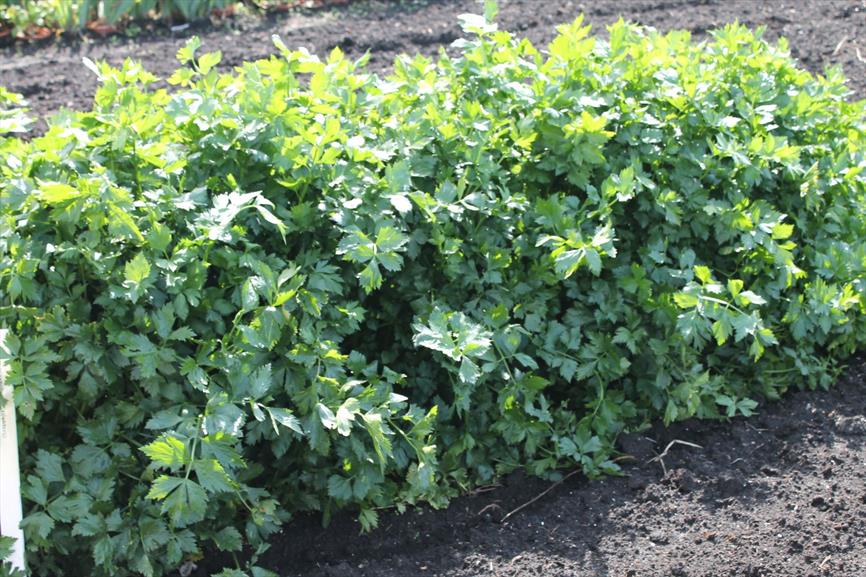
Few know this wild yet fragrant plant but it is possible to find wild celery, with some searching, in a few places in the Netherlands. Dick Maarsen of the Aalsmeer History Garden knows this plant from an area of reed beds where his father harvested reeds 50 years ago. “In Aalsmeer people referred to a floating reed bed, with a breadth of 40 cm, as a rietbonk [reed lump]. Along the edge of such a lump, growing here and there between the bulrush and the water crowfoot, there would be a head of wild celery. As a young boy I used to help with the reed harvest. If I was bitten by insects, my father rubbed wild celery over my skin and then fewer insects would bother me.” In the wild the wild celery its growth habit is much more lax and produces tall flowers that bloom from July until the autumn. Be careful not to confuse the wild celery with the really poisonous water hemlock.
Read more.... »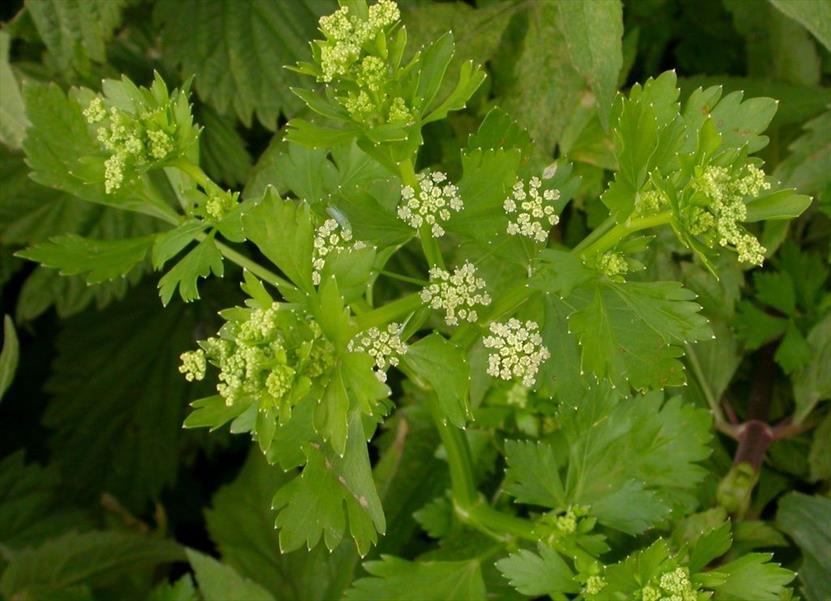
Themes
Leaves can be used either raw or cooked as a flavouring, especially in soups. They can also be eaten raw but have a very strong flavour.
Celery is toxic if consumed in large amounts. Its detrimental effect on the uterus renders it harmful to pregnant women. Care must be taken to avoid mistaking wild celery with the really poisonous water hemlock.
Wild celery has a long history of medicinal use. It is an aromatic, bitter tasting herb that reduces blood pressure, relieves indigestion, stimulates the uterus and acts as an anti-inflammatory. The ripe seeds, the green parts and root are a laxative, relieves flatulence, a diuretic, increases milk production, calms the nerves, is a stimulant and tonic. Wild celery is said to be useful in cases of hysteria, promoting restfulness and sleep. An essential oil obtained from the plant has a calming effect on the central nervous system, it is used in treating rheumatism and kidney complaints.
Details
| Description: | Herb, up to 0.90 m. |
|---|---|
| Distributions: | Europe |
| Habitat: | Somewhat brackish sites: along the edge of salt marshes, ‘green’ beaches, and sometimes along ditches or in reed beds, especially when the water was more brackish in the past. |
| Year cycle: | Flowers only once, (monocarpic biennuals and short-lived perennials) |
| Hardiness: | 23 - 34 f (half-hardy - unheated glasshouse/mild winter) |
| Flowering period: | Juli - september |
| Flower color: | Green, white |
| Notes on flowers: | Green, white. |
| Fruiting period: | Augustus - september |