• Gardens
  • Find plants
  • Floriade 2022
  • Botanic guardians
  • home
  • about us
  • contact
Nederlands
  Back to results

Coffin-tree

Taiwania cryptomerioides

Cypress family (Cupressaceae)

Vulnerable

Moved from Alaska to Taiwan

Taiwania is, as the name suggests, (almost) exclusively found in Taiwan. About 100 million years ago Taiwania was found only in northern Alaska, Canada and Russia. About 50 million years ago, this cypress spread to Spitsbergen and Japan, and 14 million years ago it had also reached Europe, e.g. Germany and Italy, only to subsequently disappear from there.

Individuals in Taiwan and on the Chinese mainland are sometimes considered to be two different species but the differences are gradual. The tree can reach 2000 years in age. The timber is mainly used for coffins because it is light but very resistant. 

Read more.... »
Moved from Alaska to Taiwan

Taiwania is, as the name suggests, (almost) exclusively found in Taiwan. About 100 million years ago Taiwania was found only in northern Alaska, Canada and Russia. About 50 million years ago, this cypress spread to Spitsbergen and Japan, and 14 million years ago it had also reached Europe, e.g. Germany and Italy, only to subsequently disappear from there.

Individuals in Taiwan and on the Chinese mainland are sometimes considered to be two different species but the differences are gradual. The tree can reach 2000 years in age. The timber is mainly used for coffins because it is light but very resistant. 

Scented forest giant

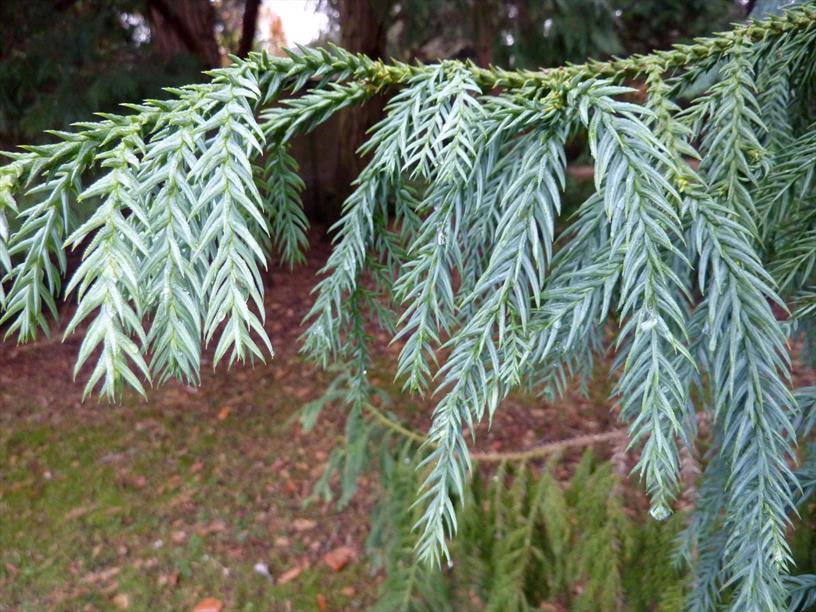
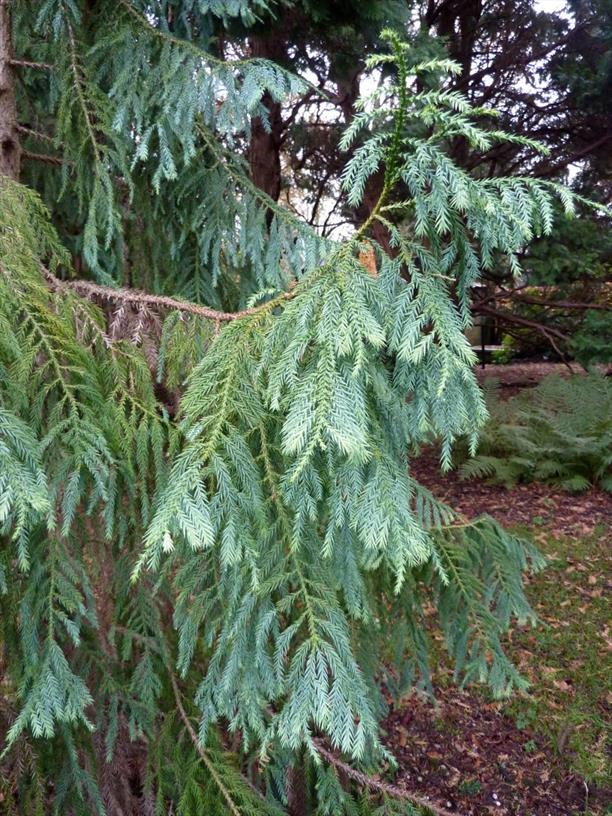
Taiwaniam cryptomerioides is one of the tallest trees in Asia. In the wild it can grow to heights of more than 80 m with trunk diameters of 3 – 4 m possible. The appearance of the young tree differs from that of a mature tree. Young trees have branches that hang down with Cryptomeria-like needles (hence the species name) and have a pyramidal shape whereas the mature trees have no branches on two thirds of the trunk. The branches are positioned further up and are held horizontally, rather than hanging giving the tree an entangled broad looking crown.

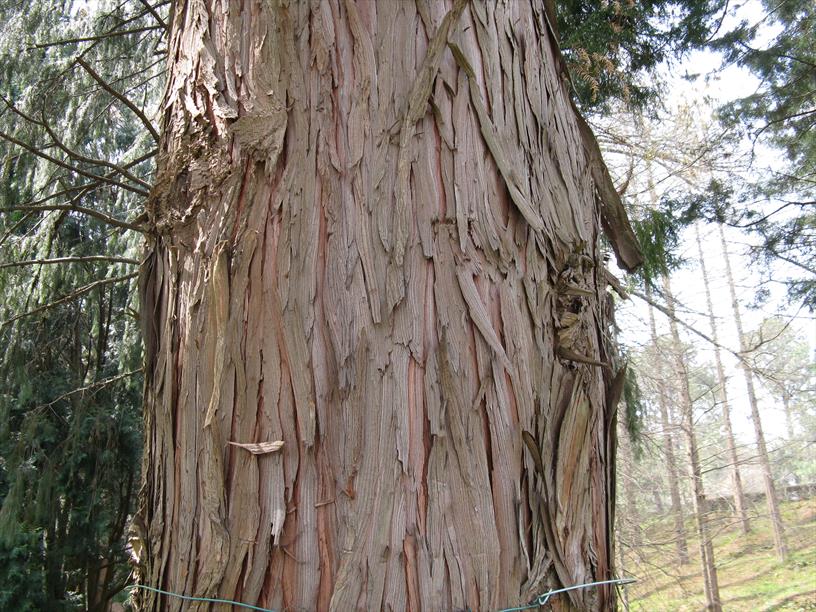
The wood of Taiwania is red-brown, scented, strong, dense and it often used for building temples and coffins. As a result of this latter use, it gets its alternative common name ‘the coffin tree’. In Vietnam the wood is used as roof tiles by the local people, and extracts from the tree are believed to help in the fight against cancer. Oil extracted from the heartwood works as a pesticide for house mites.

Ecology and habitat

Taiwania prefers very damp, acidic soils and can grow on remote mountains at altitudes of between 1800 and 2600 m. The tallest and oldest specimens, of between 1600 and 2000 years old, were found in rainforest on the border between Myanmar and China. Two million years ago fossil finds have evidenced the fact that Taiwania had a much wider natural distribution than now, namely the whole of Eurasia and North America; today this species is restricted to Myanmar, China, Taiwan and north Vietnam.

Threat

The only population of about 100 individuals that occurs in Vietnam is threatened by logging and fire. In the south of Taiwan the largest native population (about 10,000 individuals) was found and has been protected, but other populations in Taiwan are threatened by wide scale logging. The tree is now also grown in plantations.

« Description

Present in:

Hortus Botanicus Amsterdam
Landgoed Schovenhorst
Pinetum Blijdenstein
Hortus botanicus Haren / Groningen

Themes

The Botanical Gardens Association cannot take any responsibility for any adverse effects of the use of plants. Always seek the advice of a professional before using any plant medicinally. Always seek the advice of a professional before using any plant medicinally.

Crown jewel in the Blijdenstein Pinetum and Schovenhorst Estate.

Part of the Dutch National Conifer Collection.

The wood of this giant is reddish brown, fragrant, strong and hard.

The wood is used in the making of temples and coffins hence its English name, the coffin tree.

An extract from this tree can help in the fight against cancer. Oil extracted from the heartwood is used as a pesticide for mites.

Details

Description: Conifer, up to 80 m and a diameter of 4 m.
Distributions: Along the border between china and myanmar, and taiwan. there is also a small population in vietnam
Habitat: Temperate conifer forests.
Year cycle: Perennial (polycarpic evergreen)
Hardiness: 5 - 14 f (hardy - cold winter)
Flowering period: Mei - juni
Flower color: Not applicable
Fruiting period: Mei - november

Distribution

https://threatenedconifers.rbge.org.uk/conifers/taiwania-cryptomerioides

Sources

J. Wolf & A. Aptroot. 2014. De Taiwanese cipres, een bijzonder levend fossiel. Blijdenstein Nieuws 32: 14-15.,
http://www.conifers.org/cu/Taiwania_cryptomerioides.php,
http://www.iucnredlist.org/details/31255/0,
http://www.efloras.org/florataxon.aspx?flora_id=2&taxon_id=200005401,
http://www.conifers.org/cu/Taiwania_cryptomerioides.php
  Back to results
NVBT
  • Press
  • Contact
  •