Chinese Peony
Paeonia lactiflora
Peony family (Paeoniaceae)

The stories related to this plant are still being edited.
Themes
The Botanical Gardens Association cannot take any responsibility for any adverse effects of the use of plants. Always seek the advice of a professional before using any plant medicinally. Always seek the advice of a professional before using any plant medicinally.
in China, Korea en Japan wordt een aftreksel van de gedroogde en geschilde wortels al eeuwenlang gebruikt om reumatische artritis, auto-immuunziekte, hepatitis, menstruatiepijn, kramp en koorts te behandelen. Glucosiden, met name paeoniflorin, zijn verantwoordelijk voor de farmacologische activiteiten zoals de pijnstillende, ontstekingsremmende en immunosuppressieve effecten. In diertesten werkte paeoniflorin goed tegen artritis, maar betrouwbare klinische testen op mensen zijn er nog onvoldoende om conclusies te kunnen trekken over de werkzaamheid van de extracten en hun actieve inhoudsstoffen.
Details
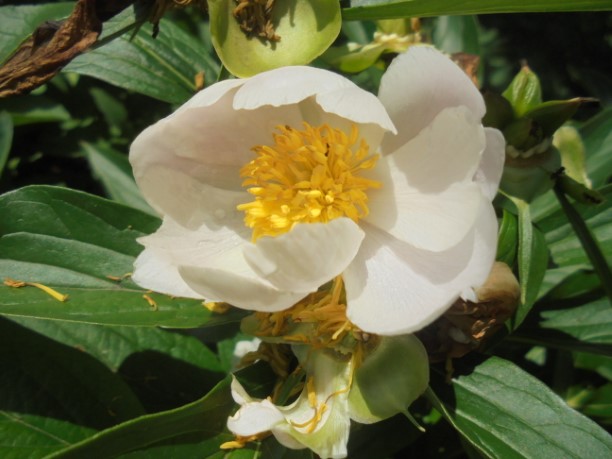
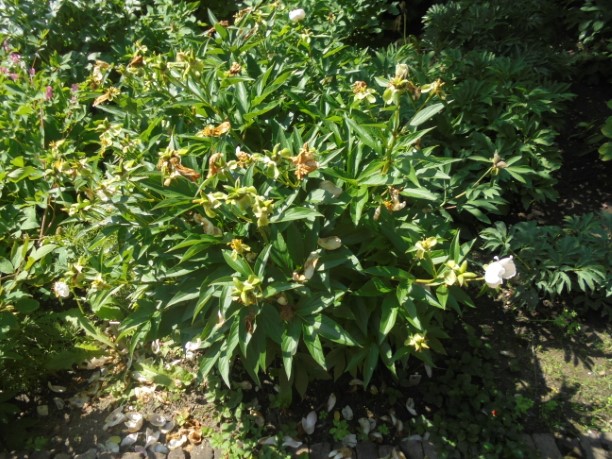
| Description: | Herb, tot 60 cm. |
|---|---|
| Distributions: | Oost-azië |
| Habitat: | In bossen en graslanden. |
| Year cycle: | Perennial (trees and shrubs included) |
| Hardiness: | -4 - 5 f (hardy - very cold winter) |
| Flowering period: | Mei - juni |
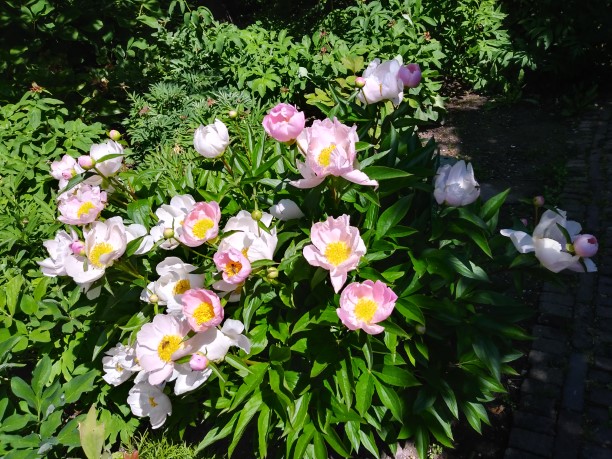
| Flower color: | White, pink |
| Notes on flowers: | Met witte of roze bloemen. |
Sources
http://www.efloras.org/florataxon.aspx?flora_id=2&taxon_id=200008034,https://pfaf.org/user/Plant.aspx?LatinName=Paeonia+lactiflora,
He D.-Y. & Dai S.-M.-2011. Anti-inflammatory and immunomodulatory effects of Paeonia lactiflora a traditional Chinese herbal medicine. Frontiers in Pharmacology 2011, 2: 10.https://www.ncbi.nlm.nih.gov/pmc/articles/PMC3108611/,
https://www.ema.europa.eu/en/documents/herbal-report/draft-assessment-report-paeonia-lactiflora-p...