• Gardens
  • Find plants
  • Floriade 2022
  • Botanic guardians
  • home
  • about us
  • contact
Nederlands
  Back to results

Biond’s magnolia or Chinese willow leaf magnolia

Magnolia biondii

Magnolia family (Magnoliaceae)

Least concern

Silky buds and white flowers

Biond’s magnolia is a deciduous tree, up to 12 m in height with a smooth, light grey bark, silky flower buds with fragrant flowers appearing in March. The wood is used, amongst other things, for making furniture, and the flowers for their etheric oil. It is also used as an ornamental tree.

However the main use is medicinal using the flower buds. The herbal medicine Xin Yi Hua is derived from the buds of magnolias, including Magnolia biondii, and has traditionally been a popular medicine in Asiatic countries. It is used for headaches, fever and allergies. The buds contain the so-called alkaloids and (neo)lignans used to stimulate the central nervous system and as an anti-inflammatory, respectively, and a possible cancer treatment.

Magnoli biondii is closely related to the star magnolia (Magnolia stellata) that only grows in Japan. The local Chinese name means ‘hope for spring’ because the tree flowers in the late winter.

Read more.... »
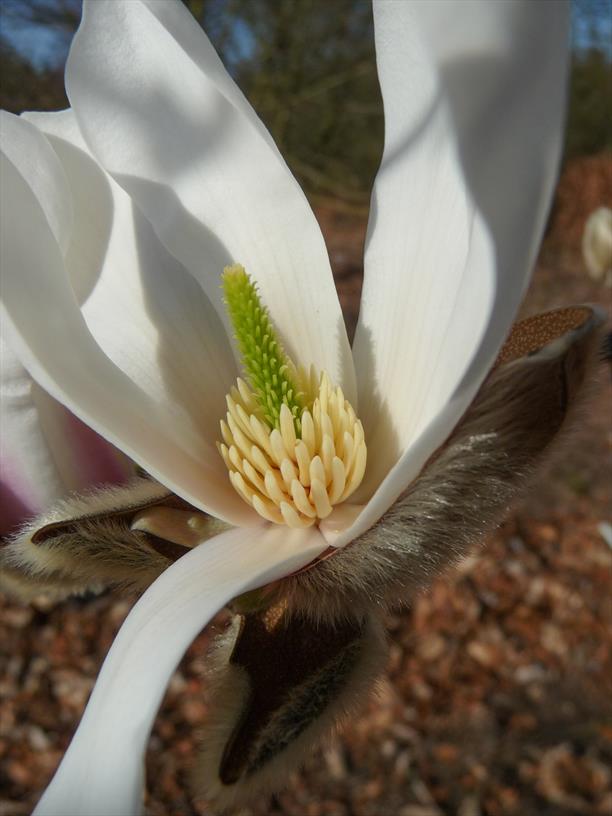
'Silky buds and white flowers'

Biond’s magnolia is a deciduous tree, up to 12 m in height with a smooth, light grey bark, silky flower buds with fragrant flowers appearing in March. The wood is used, amongst other things, for making furniture, and the flowers for their etheric oil. It is also used as an ornamental tree. However the main use is medicinal using the flower buds. The herbal medicine Xin Yi Hua is derived from the buds of magnolias, including Magnolia biondii, and has traditionally been a popular medicine in Asiatic countries. It is used for headaches, fever and allergies. The buds contain the so-called alkaloids and (neo)lignans used to stimulate the central nervous system and as an anti-inflammatory, respectively, and a possible cancer treatment. Magnoli biondii is closely related to the star magnolia (Magnolia stellata) that only grows in Japan. The local Chinese name means ‘hope for spring’ because the tree flowers in the late winter.

Ecology and habitat

Biondi’s magnolia is the most northerly growing Magnolia in China (Henan, Hubei, Shaanxi, Sichuan, Gansu en Shaanxi). It grows in woods and fields between 400 and 2000 m above sea level.

Threat

According to the Red List of China it has a ‘Vulnerable’ status but in the IUCN-report for the magnolia family, Magnolia biondii is registered as ‘DD” (data deficient). This is not a category of ‘threat’ but reflects the fact that, at this time, information concerning its size of habitat and population numbers is lacking. Therefore further research is necessary. Being targeted for its medicinal properties could be a real threat.

« Description

Present in:

Nationaal Bomenmuseum Gimborn

Themes

The Botanical Gardens Association cannot take any responsibility for any adverse effects of the use of plants. Always seek the advice of a professional before using any plant medicinally. Always seek the advice of a professional before using any plant medicinally.

‘Hsin-i’ (shin-i, hsenyi) is made from the buds of the magnolia including Magnolia biondii, and has traditionally been a popular medicine in Asian countries. It is used alleviate headaches, fever and allergies. The buds contain alkaloids and (neo)lignans that act on the central nervous system and work as an anti-inflammatory as well as possibly having anticancer properties.

The wood of Biond's magnolia is used to make, amongst other things, furniture.

The flowers of Biond's magnolia are used in essential oils.

Details

Description: Tree, up to 12 m.
Distributions: China
Habitat: Mainly in temperate forests in the mountains above 600 m altitude; growing best in sandy, loamy soil.
Year cycle: Perennial (polycarpic decidous)
Hardiness: -4 - 5 f (hardy - very cold winter)
Flowering period: Maart
Flower color: White
Notes on flowers: White
At its best: Maart

Distribution

http://maps.iucnredlist.org/map.html?id=193906

Sources

http://www.iucnredlist.org/details/193906/0,
https://en.wikipedia.org/wiki/Magnolia_biondii
  Back to results
NVBT
  • Press
  • Contact
  •