Laburnum
Laburnum anagyroides
Bean family (Fabaceae)
 Least concern



Not high, but gold and old
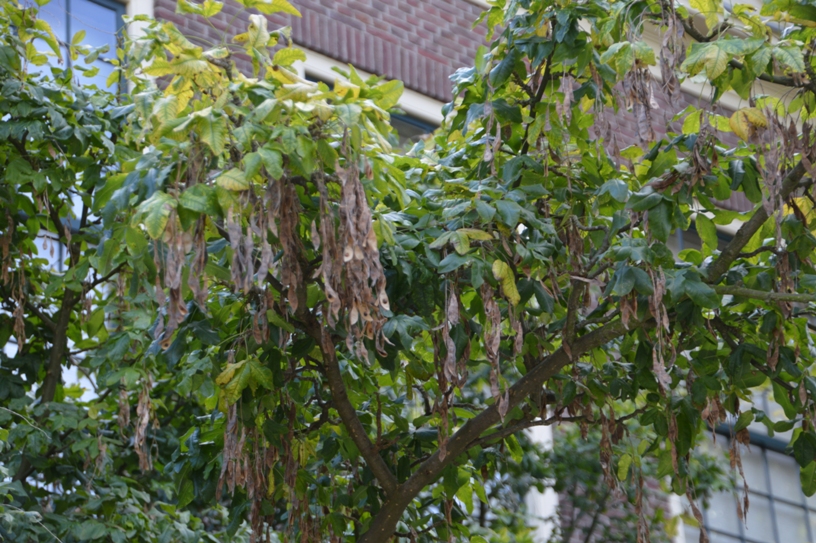
Laburnum is the oldest tree in the Leiden Botanic Garden and was probably planted in 1601. This species is native to Central and southern Europe.
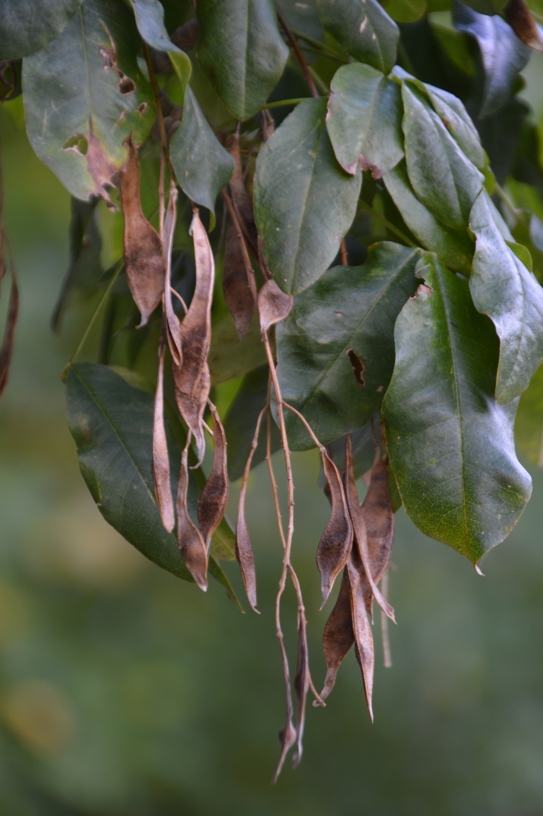
The young twigs are grey and downy at the top, and the leaves are trifoliate. It never becomes a very tall tree and often grows with a shrub habit - one way that enables it to rejuvenate. The laburnum pods resemble flat green beans; the seeds however are highly toxic.
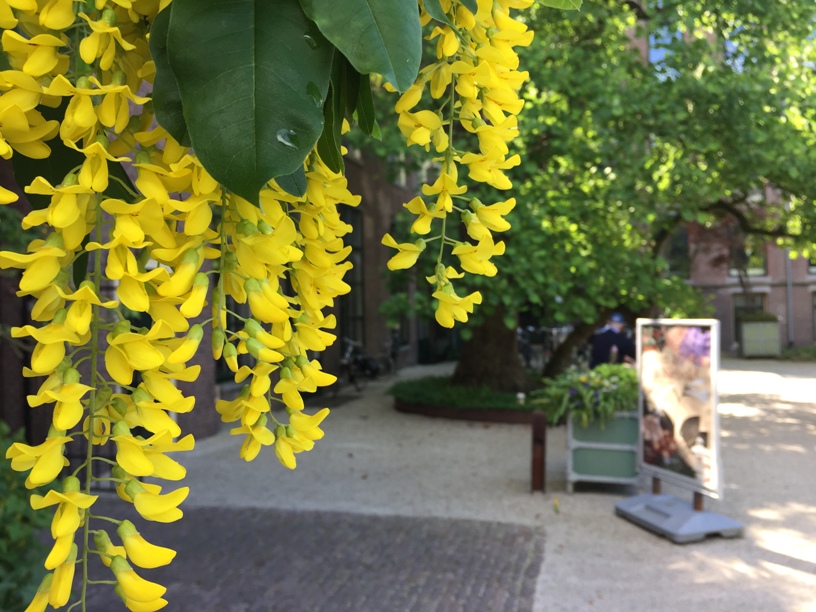
Although the Leiden laburnum barely grows anymore, it still flowers every spring with pendulous clusters of bright yellow flowers. In 1972 the Garden almost lost this specimen but thankfully it was rescued in the nick of time by major tree husbandry.

Themes
Crown jewel in the Leiden Botanic Garden.
The seeds are legumes with large numbers of black seeds that contain cytisine, an alkaloid extremely poisonous to humans but also to goats and horses, especially when not ripe. However, some wild animals such as hares and deer can feed on them without any problems and because of this the plant is believed to have magical properties in some regions. All other parts of the plant contain cytisine and are poisonous if consumed.
The wood is hard and heavy, yellowish brown in colour, ideal for making posts, for woodturning and as a fuel. In the past (and today on historic re-enactments) it was (is) used for making bows. The tree is also known as 'false ebony' since the wood from very old specimens could be used as an ebony substitute. Laburnum anagyroides is cultivated as an ornamental tree. The most common ornamental plant in the genus is Laburnum x watereri, a hybrid between Laburnum anagyroides and Laburnum alpinum.
Details
| Description: | Tree, up to 7 m. |
|---|---|
| Distributions: | Central and southern europe. |
| Habitat: | In damp, mild habitats, especially in the calcareous soils of southern europe. |
| Year cycle: | Perennial (polycarpic decidous) |
| Hardiness: | Colder than -4 f (very hardy) |
| Flowering period: | Mei - juni |
| Flower color: | Yellow |
| Notes on flowers: | Bright yellow flowers hang in panicles of 10-30 cm; flowers have a butterfly shape. |
| Fruit color: | Brown |
| Notes on fruits: | Fruit initially hairy becoming bald, 4-6 cm long; black seeds |
| At its best: | Mei - juni |