Dragon Spruce
Picea asperata
Pine familiy (Pinaceae)
 Vulnerable




Tall and Chinese
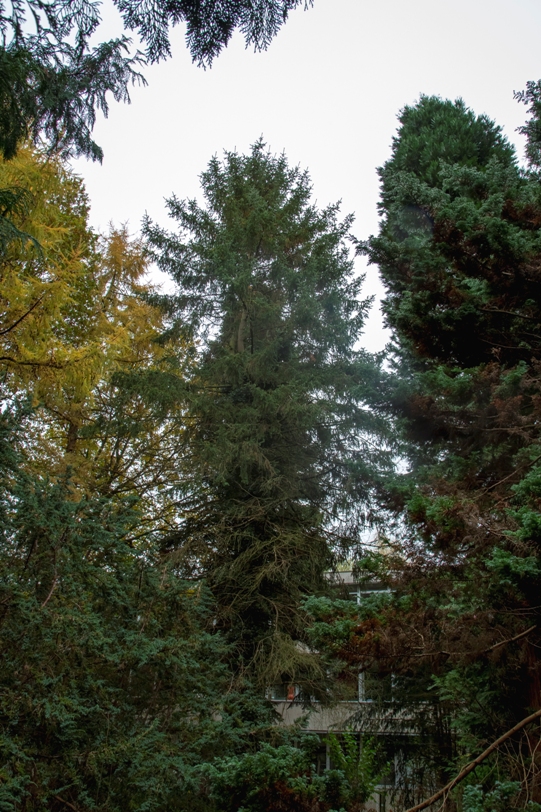
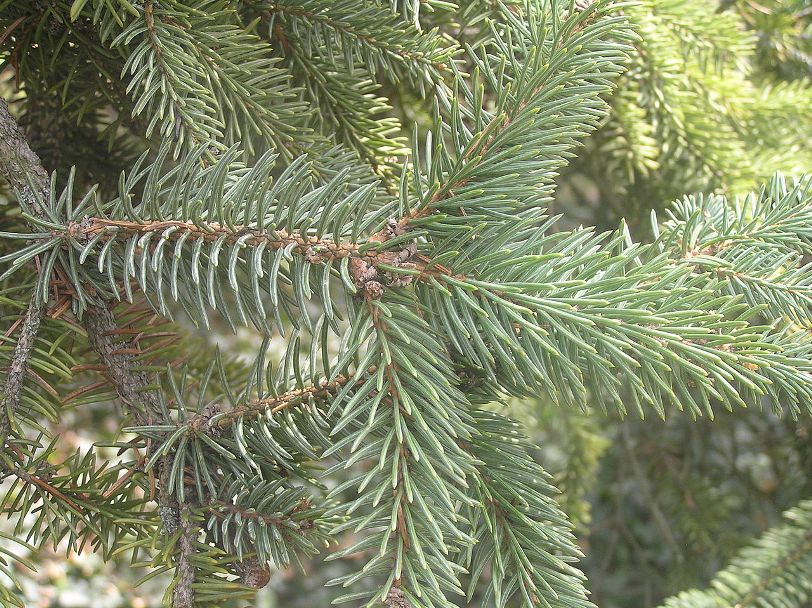
Dragon spruce can grow up to 45 m in height and has a grooved bark and red-brown twigs bearing needles, which are usually blue-green. The cones are up to 15 cm long and pointed. This spruce from China resembles the European spruce (Picea abies).
Most of the specimens growing in botanical gardens today came from Ernest Wilson, a famous plant collector in the early 20th century. Its natural distribution is in the mountains of western China where cold winters and hot summers prevail.
Due to the height this elegant fir it is an important source of timber in China. Even though a logging ban was introduced for Picea asperata in 1998, it still appears on the International Red List of threatened plants.
Themes
Crown jewel in the Haren Botanic Garden.
The wood is soft and not particularly strong. Used in general construction and in the pulp industry to make paper. The timber is used for construction, aircraft, railway sleepers, furniture and as a wood fibre. Resin can also be extracted from the trunk.
Oil in the roots, branches and leaves are used in the production of aromatic oils.
Young male catkins, either raw or cooked, can be used as a flavouring; the inside of the immature female cone is sweet and syrupy when cooked and roasted; the inner bark can be dried and ground into a powder and then used as a thickening agent in soups etc. or added to cereal flour when making bread. It is a food for emergency situations when there is nothing else. Raw seeds are also edible but too small and fiddly to be worthwhile unless times are desperate. A refreshing tea, rich in vitamin C, can be made from the young shoot tips.
Details
| Description: | Conifer, up to 25 m, conical or columnar; the needle-like leaves are dark green or blue-green and about 2 cm long. |
|---|---|
| Distributions: | West china |
| Habitat: | Forest in the high mountains between 1500 m and 3800 m in altitude; continental climate, subalpine, with cold winters and dry summers. |
| Year cycle: | Perennial (polycarpic evergreen) |
| Hardiness: | Colder than -4 f (very hardy) |
| Notes on flowers: | The green, becoming light brown, cylindrical, female cones can reach 15cm long. |
| Fruit color: | Brown |