• Gardens
  • Find plants
  • Floriade 2022
  • Botanic guardians
  • home
  • about us
  • contact
Nederlands
  Back to results

Quercus × turneri 'Pseudoturneri'

Quercus × turneri 'Pseudoturneri'

Beech family (Fagaceae)

Green oak in winter

This oak tree, which is also known as 'Austrian Oak' in Dutch, is a hybrid of the native oak (Quercus robur) and holm oak (Q. ilex), which keeps its leaves in the winter. The cross occurred in Essex, England, in 1780 in the nursery belonging to Spencer Turner. In Kew Gardens, London, there is a specimen of Quercus x turneri from 1798, which flowered for the first time in 1838. A second example, again in Kew Gardens, was named Quercus x turneri 'Pseudoturneri' and flowered for the first time in 1880. The origin of this specimen is unclear.

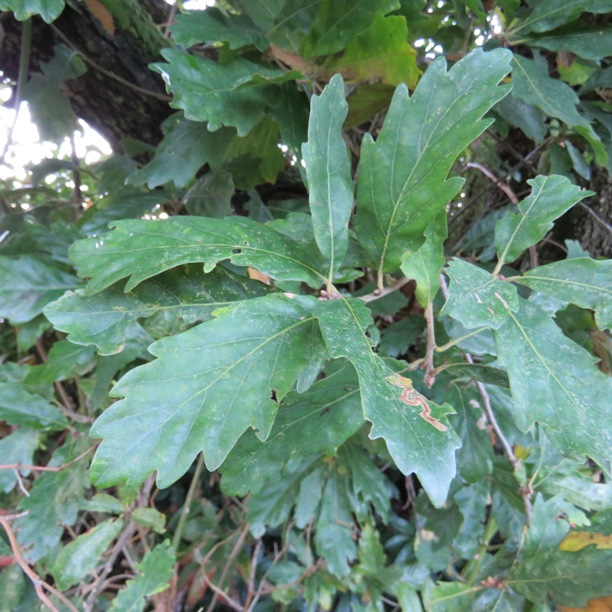
This tree keeps all its leaves in the winter and in the spring, and only when the young leaf buds bust are the majority of the ‘old’ leaves shed. The leaves are dark green with a leathery feel and have distinctive hairs along the veins on its under surface.

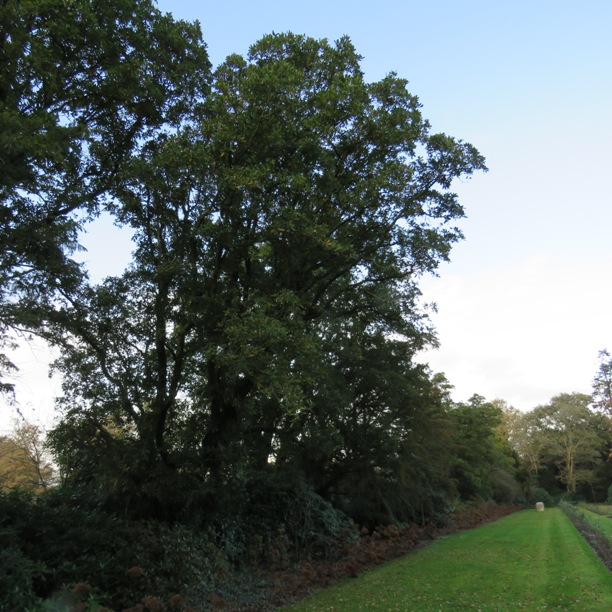
This cultivar develops from a shrub-like habit into a, sometimes, multi-trunked tree with a height of 8-10 m.

Read more.... »
Green oak in winter

This oak tree, which is also known as 'Austrian Oak' in Dutch, is a hybrid of the native oak (Quercus robur) and holm oak (Q. ilex), which keeps its leaves in the winter. The cross occurred in Essex, England, in 1780 in the nursery belonging to Spencer Turner. In Kew Gardens, London, there is a specimen of Quercus x turneri from 1798, which flowered for the first time in 1838. A second example, again in Kew Gardens, was named Quercus x turneri 'Pseudoturneri' and flowered for the first time in 1880. The origin of this specimen is unclear.

This tree keeps all its leaves in the winter and in the spring, and only when the young leaf buds bust are the majority of the ‘old’ leaves shed. The leaves are dark green with a leathery feel and have distinctive hairs along the veins on its under surface.

This cultivar develops from a shrub-like habit into a, sometimes, multi-trunked tree with a height of 8-10 m. 

The Dutch name for this oak is the Austrian oak and this is derived from its former scientific name, Quercus austriaca sempervirens. ‘Pseudoturneri’ is an evergreen cultivar. All examples are clones, or perhaps seedlings, of the specimen in Kew Gardens, London.

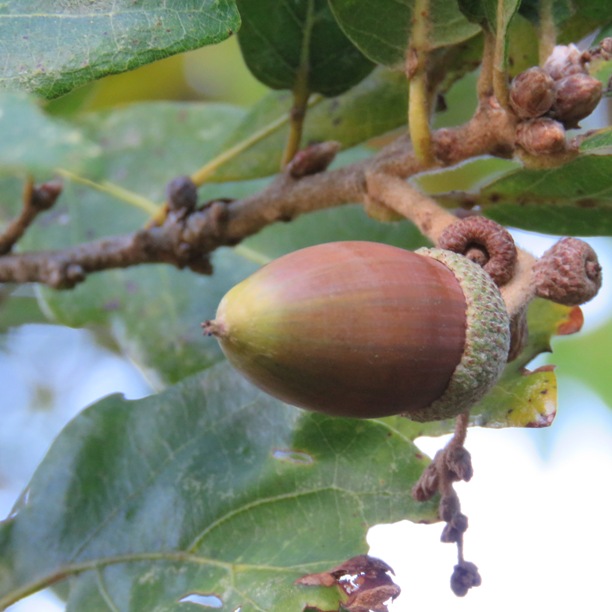
The habit is erect, later widely spreading. Young twigs are pale yellow and covered in velvety hairs. The leaves are leathery, 5-13 cm long and 2.5 - 4 cm wide, and have 4 to 8 pairs of shallow lobes or teeth. The upper surface of the leaves are dark green, the lower surface is grey and covered in felt-like hairs. In spring its beautiful inflorescence certainly deserves attention. The acorns are narrow, oval, about 2 cm long, often borne in clusters of 3 to 7.

« Description

Present in:

Trompenburg Tuinen en Arboretum
Botanische Tuin Arboretum Oudenbosch
ARTIS

Details

Description: Tree, shrub, evergreen tree with a main trunk on average greater than 12 m
Distributions: Only found in cultivation.
Habitat: Park tree
Year cycle: Perennial (polycarpic evergreen)
Hardiness: -4 - 5 f (hardy - very cold winter)
Flowering period: April - mei
Flower color: Creme, grey, white
Notes on flowers: Mannelijke bloem crèmewit in viltige katjes, vrouwelijke bloeiwijze in lang katje, grijswit.
Fruiting period: September - oktober
Fruit color: Other
Notes on fruits: Light green cupule; green to brown seed
At its best: April - mei

Sources

www.beanstreeandshrubs.org/browse/quercus,
Dendrologie van de lage landen - Jan de Koning en Wim van den Broek, Loofbomen in Nederland en Vlaanderen - Leo Goudzwaard
  Back to results
NVBT
  • Press
  • Contact
  •