Rowan
Sorbus aucuparia 'Pendula'
Rose family (Rosaceae)


Mourning in style
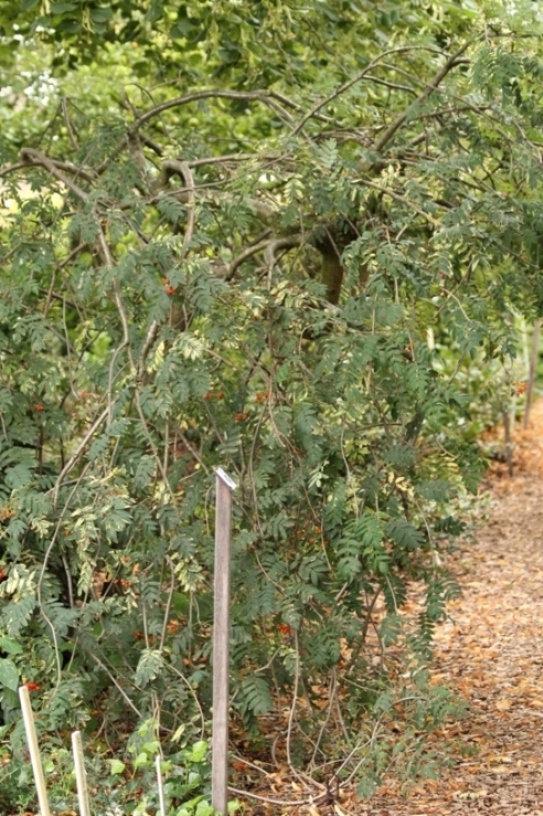
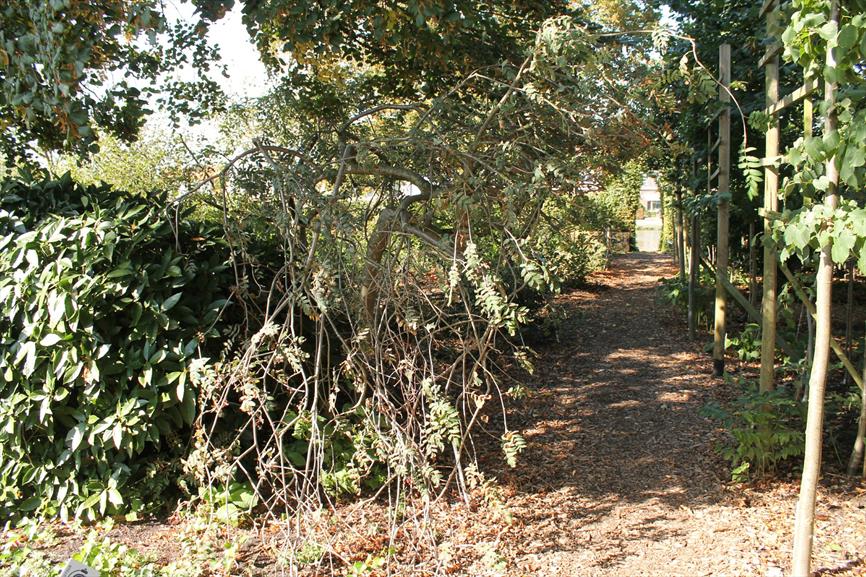
This is the weeping form of the wild mountain ash or rowan. In the wild many trees naturally form true weeping specimens occasionally, which if found are subsequently cultivated. A weeping rowan is appreciated for its grace as a garden feature, often seen today in small town gardens. In cemeteries it gives a tangible form to our grief and in old romantic gardens it often provides shelter under which a small bower can be hidden.
A weeping form is actually a growth defect in the branches - they do not want to grow upwards any longer. It is possible to use small branches as cuttings to increase the number of trees with this habit. However, if the branch is simply inserted into the ground it will grow into a creeping form of the tree. To have a fountain-shaped tree then the tree should be started higher up. Therefore, almost all weeping trees are actually 'grafts' – that is to say a ‘cutting on a rootstock’. Weeping rowans are grafted onto a vertical rootstock of a wild mountain ash.
Themes
Crown jewel in the Historic Garden of Aalsmeer.
In the past weeping trees were popular on country estates. People did not want to walk or sit in the sun so growers would have a large number of such trees on offer.
Details
| Description: | Tree, shrub, 3-6 m, weeping. |
|---|---|
| Distributions: | Only found in cultivation. |
| Habitat: | Vegetatively propagated. |
| Year cycle: | Perennial (polycarpic decidous) |
| Hardiness: | -4 - 5 f (hardy - very cold winter) |
| Flowering period: | Mei |
| Flower color: | White |
| Fruiting period: | September - oktober |
| Fruit color: | Orange, red |
| At its best: | Mei, september - oktober |