• Gardens
  • Find plants
  • Floriade 2022
  • Botanic guardians
  • home
  • about us
  • contact
Nederlands
  Back to results

Foxbane

Aconitum vulparia

Buttercup family (Ranunculaceae)

Near Threatened (NT)

Since the iron age used as arrow poison

Aconitum has a long history of being a poisonous plant. All parts of the plant are poisonous with the roots and seeds being the most deadly. Monkscap was probably already being used as a poison for arrowheads in the Iron Age and was also renowned for getting rid of that enternal problem – opponents and was used in the execution of criminals by the Romans and Greeks. Most probably its Latin name reflects the Greek konè (killing); the species name vulparia comes from the Latin vulpus (fox) an animal that is often eradicated with poisonous food.

Read more.... »
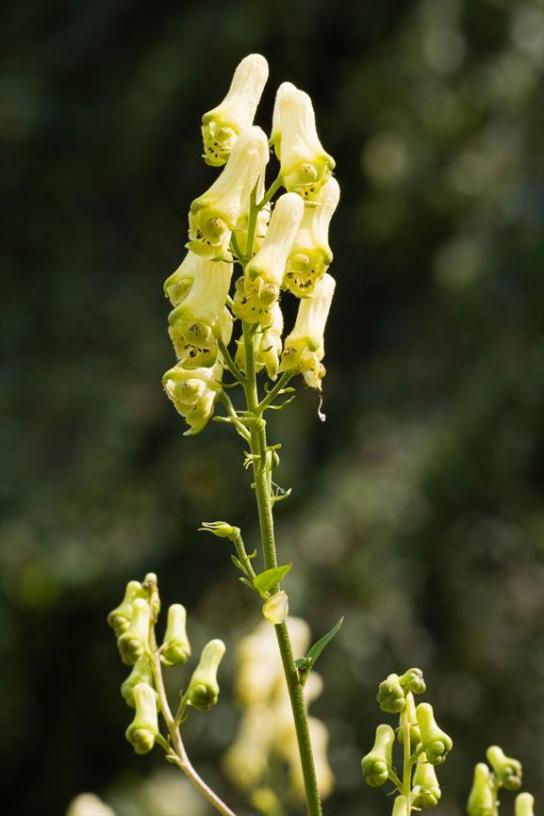
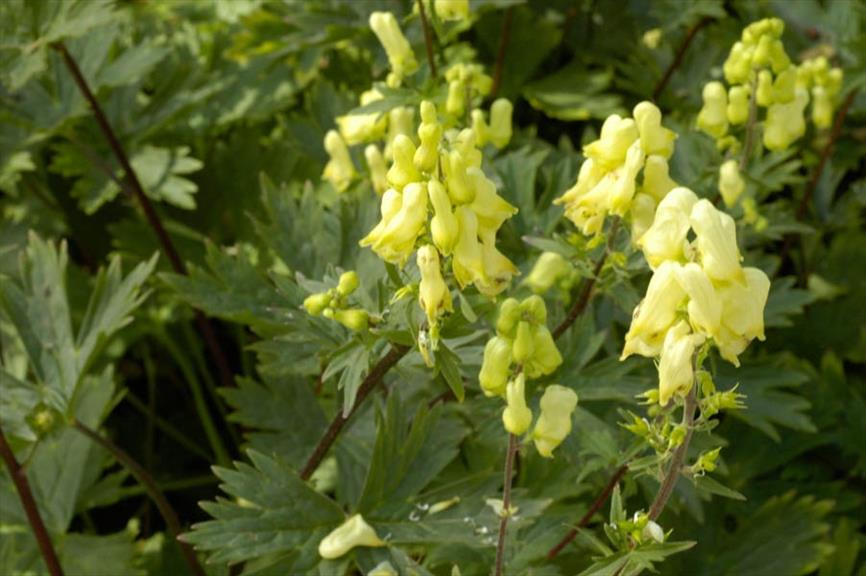
Since the iron age used as arrow poison

Aconitum has a long history of being a poisonous plant. All parts of the plant are poisonous with the roots and seeds being the most deadly. Monkscap was probably already being used as a poison for arrowheads in the Iron Age and was also renowned for getting rid of that enternal problem – opponents and was used in the execution of criminals by the Romans and Greeks. Most probably its Latin name reflects the Greek konè (killing); the species name vulparia comes from the Latin vulpus (fox) an animal that is often eradicated with poisonous food.

Ecology and habitat

Aconitum vulparia grows in shade to semi-shaded, damp, fairly nutrient poor to relatively nutrient rich, calcareous lime-, loess- and marl soils, and also in stony places. The plant grows in wet deciduous woods, such as along streams and near springs. The distribution of this central European mountain plant reaches in the west just about the Netherlands and Belgium. It is only found along the Geul river in Zuid-Limburg as a native plant, otherwise it has been planted. These find in Zuid-Limburg are adjacent to the earlier locations in Belgium. Cross pollination is brought about by long-tongued bumblebees. The global distribution of the genus Bombus (bumblebee) and the monkscap are virtually identical.

Threat

In the wild this yellow monkscap occurs only in the forests of Zuid-Limburg growing on calcareous substrates, and is thus a rarity in the Netherlands. Yet in the east of Europe this species is more common. The thickening-up of the forest and fertilisation practices are the most important reasons for its decline because this species prefers open, relatively light edges of forests.

« Description

Present in:

Hortus Alkmaar
Hortus botanicus Leiden
Botanische Tuinen Universiteit Utrecht
Botanische Tuin Kerkrade
TU Delft Hortus Botanicus
Botanische Tuin De Kruidhof
Nederlands Openluchtmuseum

Themes

Wolf's bane, or aconite, was probably already in use as an arrowhead poison in the Iron Age and was used to execute criminals by the Romans and Greeks. Its Latin name probably reflects the Greek konè (killing); the species name 'vulparia' comes from the Latin 'vulpus' (fox) an animal that is often eradicated with poisonous food.

All plant parts are poisonous, the roots and seeds are the most deadly.

The flower is well adapted to being cross pollinated by long-tongued bumblebees. The global distribution of the genus Bombus (bumblebee) and the monkscap are virtually identical.

Details

Description: Herb, up to 1.25 m.
Distributions: Europe
Habitat: Humid deciduous forest, particularly near streams and around natural springs.
Year cycle: Perennial (polycarpic decidous)
Hardiness: 14 - 23 f (hardy - average winter)
Flowering period: Juni - augustus
Flower color: Yellow
Notes on flowers: Yellow
At its best: Juni - augustus

Distribution

http://www.verspreidingsatlas.nl/0006

Sources

http://www.floron.nl/publicaties/rode-lijst-2012,
IUCNredlist.org
  Back to results
NVBT
  • Press
  • Contact
  •