Furrowed Bitter Orange
Citrus × aurantium 'Caniculata'
Rue family (Rutaceae)





The stories related to this plant are still being edited.
Present in:
Themes
Crown jewel of the Twickel Estate.
A form discovered in the 16th century in Tuscany. Very rare in contemporary Dutch collections.
Fragrant flowers and fruits.
Sour oranges are used principally to make marmalade. There is great demand for 'sour orange oil', which is extracted from the rind and used for flavouring confectionery, ice cream, cakes, puddings, chewing gum, soft drinks, liqueurs and pharmaceuticals. The dried peel of the immature fruit yields the essential oil, 'neroli oil'. Neroli oil or 'neroli bigarade oil' is distilled from the flowers of the sour orange and is sometimes used as a flavouring in confectionary, soft drinks and liqueur, ice cream, cakes and chewing gum. The ripe peel of the sour orange contains 2.4 to 2.8 percent neohesperidin dihydrochalcone, a substance that is twenty times sweeter than saccharin and two hundred times sweeter than cyclamate; the green skin can contain 14 percent neohesperidin dihydrochalcone.
The flowers yield nectar for honey bees.
Details
| Description: | Tree |
|---|---|
| Distributions: | Only found in cultivation. |
| Habitat: | In gardens |
| Year cycle: | Perennial (polycarpic evergreen) |
| Flower color: | White |
| Fruit color: | Orange |
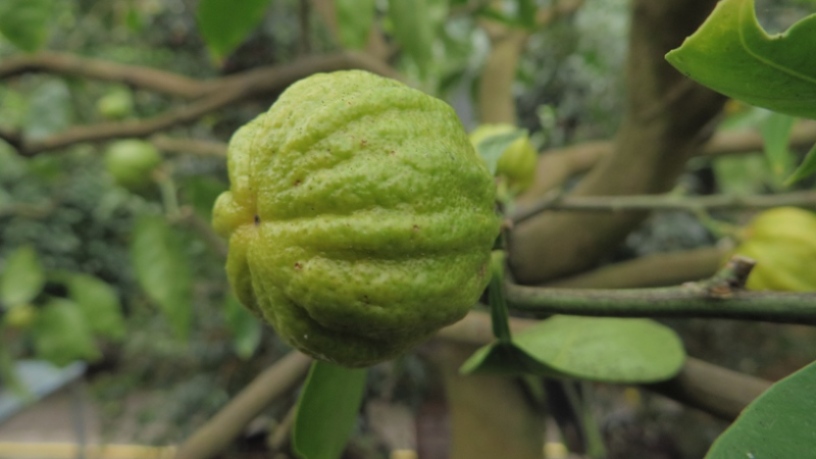
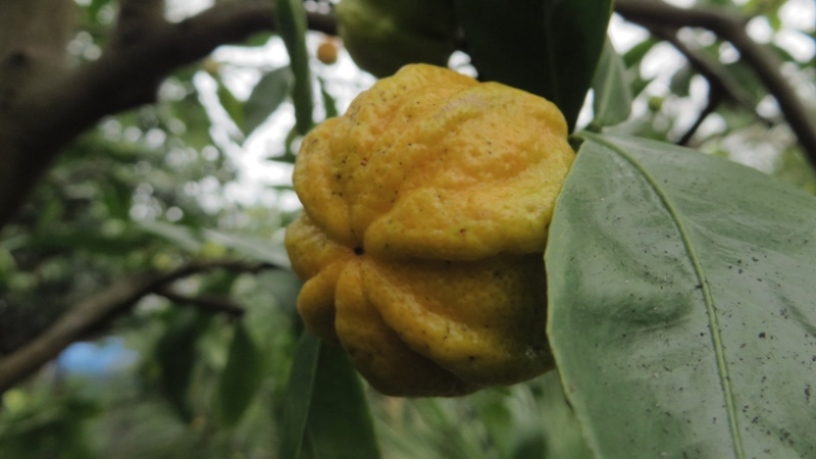
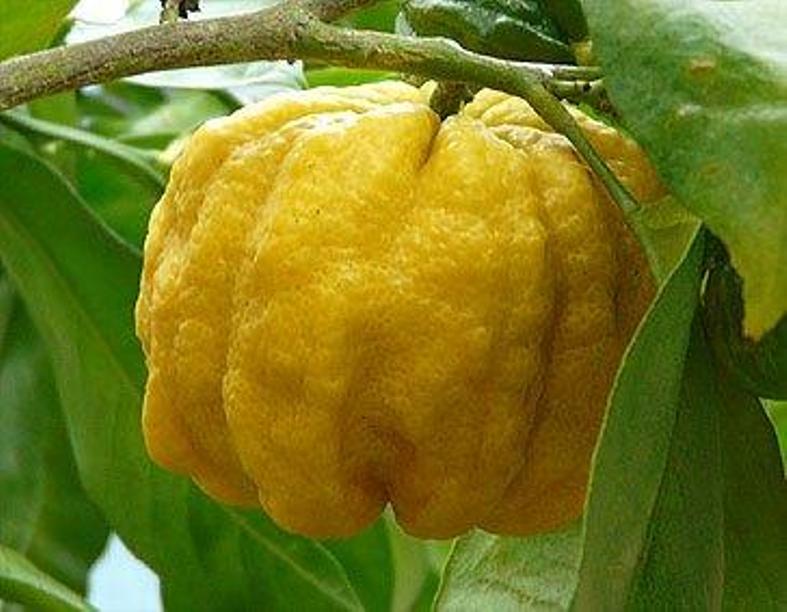
| Notes on fruits: | Small orange fruits, about 5 cm in diameter; the fruits of 'caniculata' are clearly longitudianlly ridged and contain large seeds. |