Korean Mountain-ash
Sorbus alnifolia
Rose family (Rosaceae)




Alder … ash … true rowan
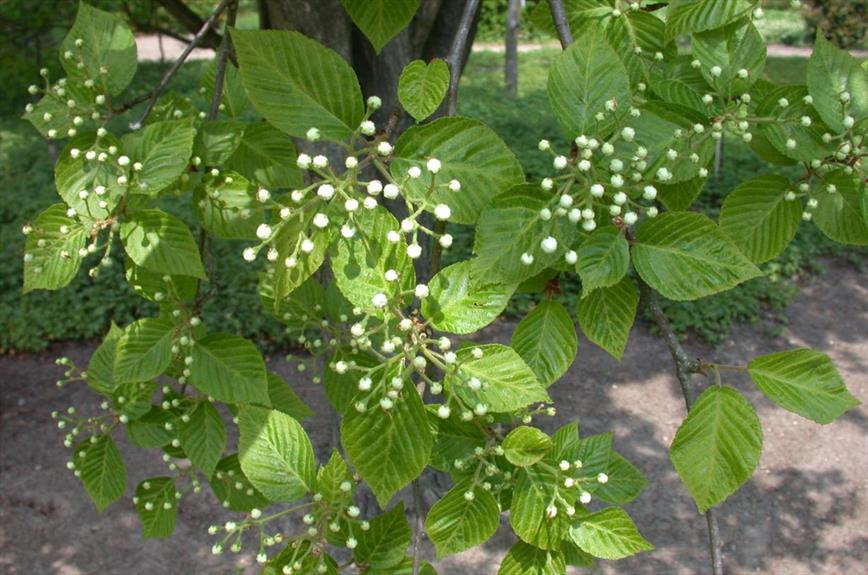
This rowan is an imposter. The tree comes from Central Asia and is sometimes called, the Korean ash. The leaves are ovate and serrate and appear more similar to those of the more familiar alder. The tree is called ‘mountain ash' because its native habitat is high in the mountains of Japan, China and Korea.
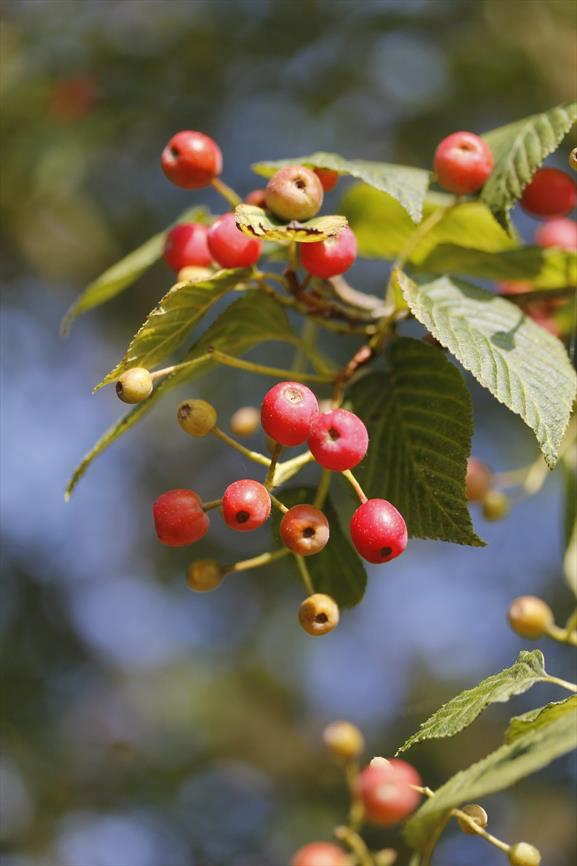
The tree bears umbels of small white flowers, which are reminiscent of the rowan, or mountain ash, that is found in the forests of northern Europe. The tree also bears bright red or pink berries loved by birds, this is reflected in its Dutch vernacular name, the ‘thrush-berry’.
In autumn the leaves of Sorbus alnifolia change colour from a deep green to bright yellow.
Themes
Crown jewel in the Belmonte Arboretum.
The pea-sized fruit can be eaten raw or cooked and are produced on the plant in fairly large bunches making them easy to harvest - its flavour is fairly mild and somewhat mealy.
Wood is even grained and used to make rulers.
The seeds probably contain hydrogen cyanide - the ingredient that gives almonds their characteristic flavour. Unless the seed is very bitter it should be perfectly safe to eat in reasonable quantities. In small quantities, hydrogen cyanide has been shown to stimulate respiration and improve digestion, it is also claimed to be of benefit in the treatment of cancer. In excess, however, it can cause respiratory failure and even death.
Details
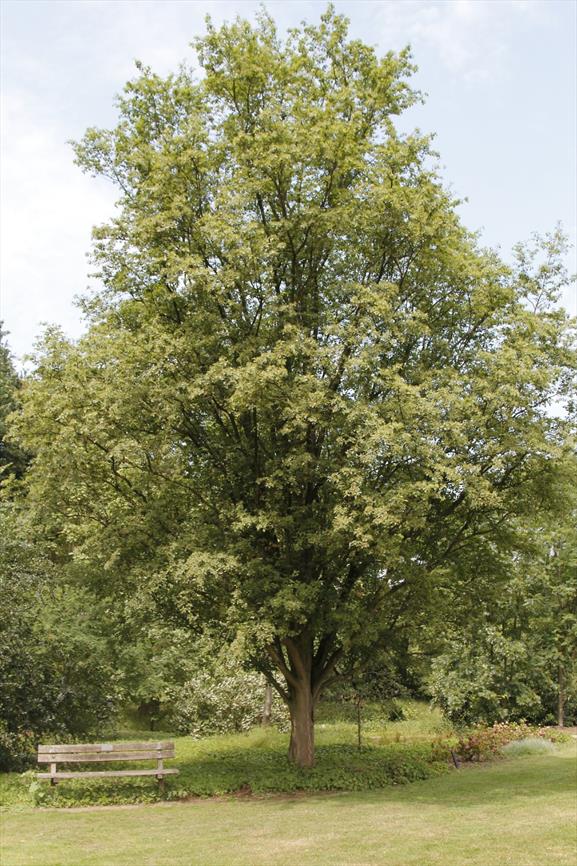
| Description: | Tree, vigorous, up to 15 m. |
|---|---|
| Distributions: | Japan, korea, china |
| Habitat: | Slopes, gullies, mixed forests and shrubby thickets at altitudes of 500 - 2400 m; cool mountain climates. |
| Year cycle: | Perennial (polycarpic decidous) |
| Hardiness: | Colder than -4 f (very hardy) |
| Flowering period: | April - mei |
| Flower color: | White |
| Fruiting period: | Augustus - oktober |
| At its best: | April - mei, september - oktober |