Persimmon
Diospyros kaki
Ebony family (Ebenaceae)





Gods’ food from Asia
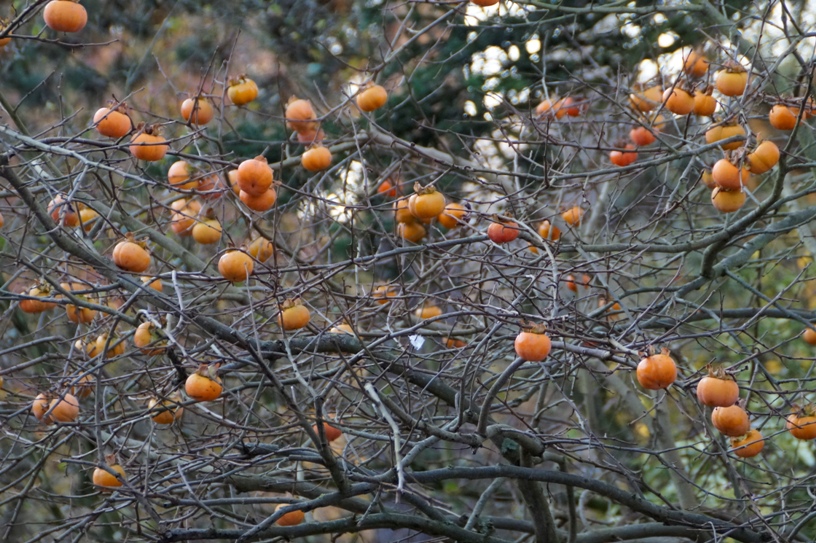
Japanese persimmon, date plum or keg fig, is a deciduous fruit tree that grows from the Himalayas across to Japan. Japanese persimmon is one of the oldest cultivated plants. In China it has been grown since long before our era. It has been cultivated for so long that the true wild form is no longer recognisable.
In Dutch it is also referred to as ‘Gods’ pear’ referring to its highly valued property of being able to heal headaches, back pain and foot problems. The tree is dioecious, so either male or female. For a female to set fruit, a male tree has to be growing near by in order to provide the pollen.
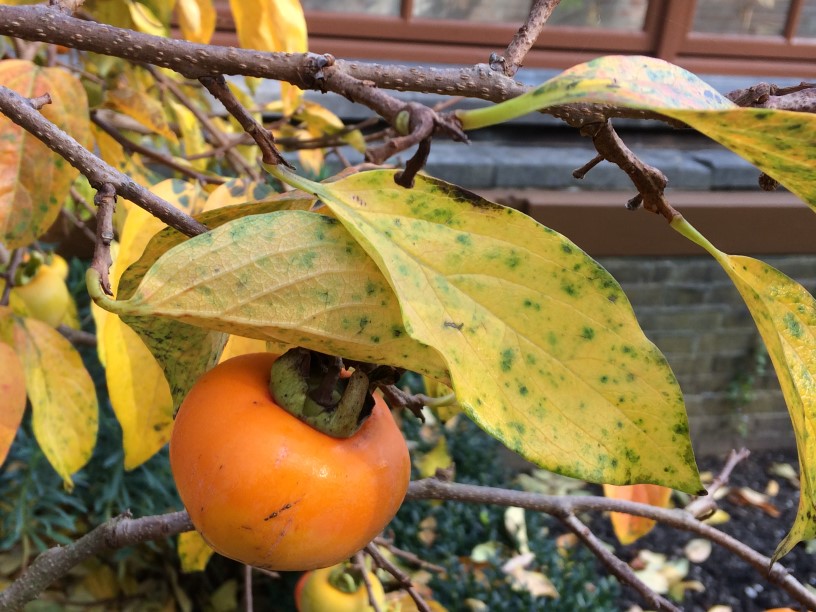
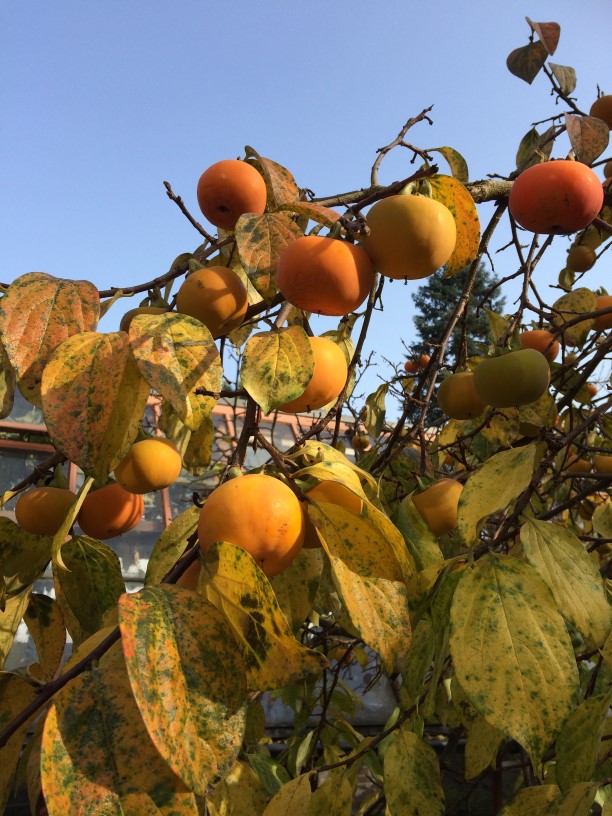
The orange fruits are hard, but edible, with a slight sour taste. A cultured form from Israel is sold under the name of ‘Sharon fruit’.



Themes
Crown jewel in the Zuidas Botanic Garden and the Botanical Garden TU Delft.
It is used by birds as a nesting place.
The persimmon is usually cut into sections and the skin and core removed. Persimmons are eaten dry during the winter, and are very popular with children. Powdered sugar is sometimes added to enhance the sweetness.
Healing properties are attributed to the kaki by people throughout Asia.
A vase adorned with a kaki cake, a pine branch and an orange, symbolises the desire for 'great happiness in 100 affairs'.
Details
| Description: | Tree, up to 20 m tall. |
|---|---|
| Distributions: | Cultivated worldwide, mainly in china, japan and korea. |
| Habitat: | Cultivated. |
| Year cycle: | Perennial (polycarpic decidous) |
| Hardiness: | 5 - 14 f (hardy - cold winter) |
| Flowering period: | Mei - juni |
| Flower color: | White, yellow, red |
| Notes on flowers: | Male flowers small, in 3-5-flowered cymes; corolla white, yellowish white, or red, 6-10 mm; female flowers solitary; calyx 3 cm or more in diameter; corolla usually yellowish white, bell-shaped. |
| Fruiting period: | September - oktober |
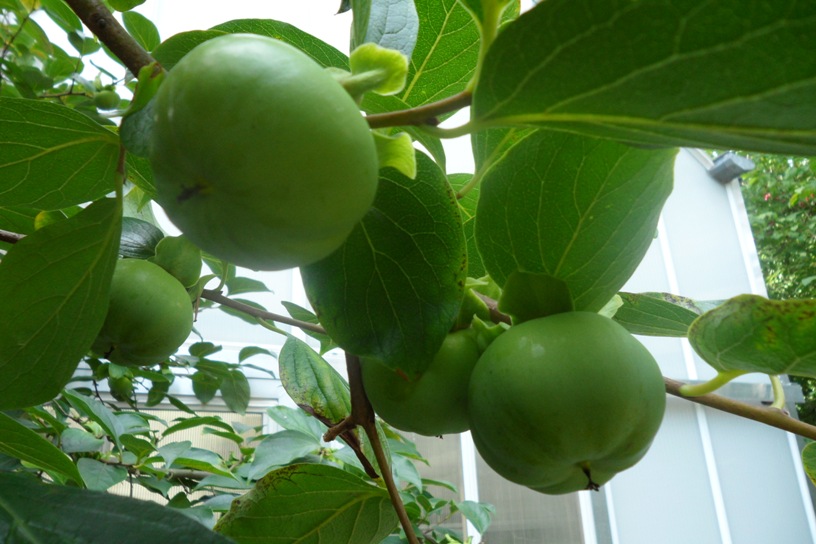
| Fruit color: | Yellow, orange |
| Notes on fruits: | Berries yellow to orange, flattened globose to ovoid but usually globose, 2-8.5 cm in diam. |
| At its best: | September - oktober |