• Gardens
  • Find plants
  • Floriade 2022
  • Botanic guardians
  • home
  • about us
  • contact
Nederlands
  Back to results

Meadow Saffron

Colchicum autumnale

Bellwort family (Colchicaceae)

Vulnerable (VU)

Collecting prohibited

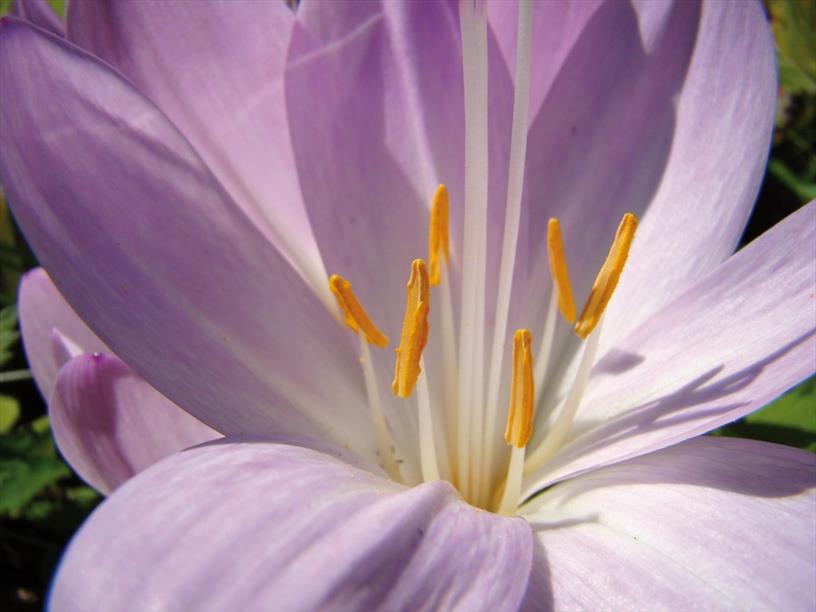
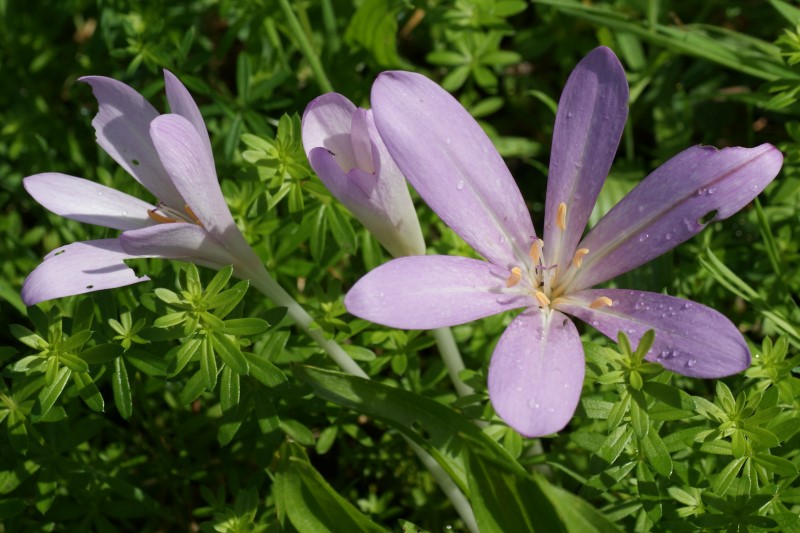
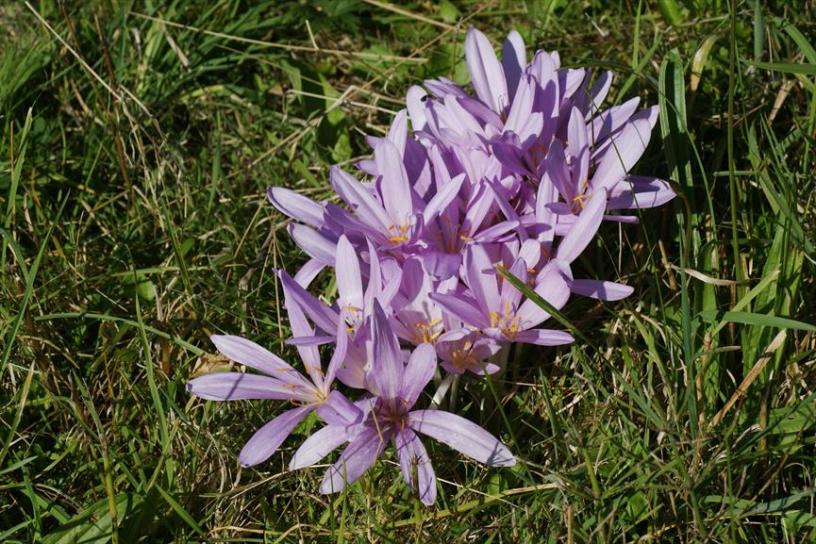
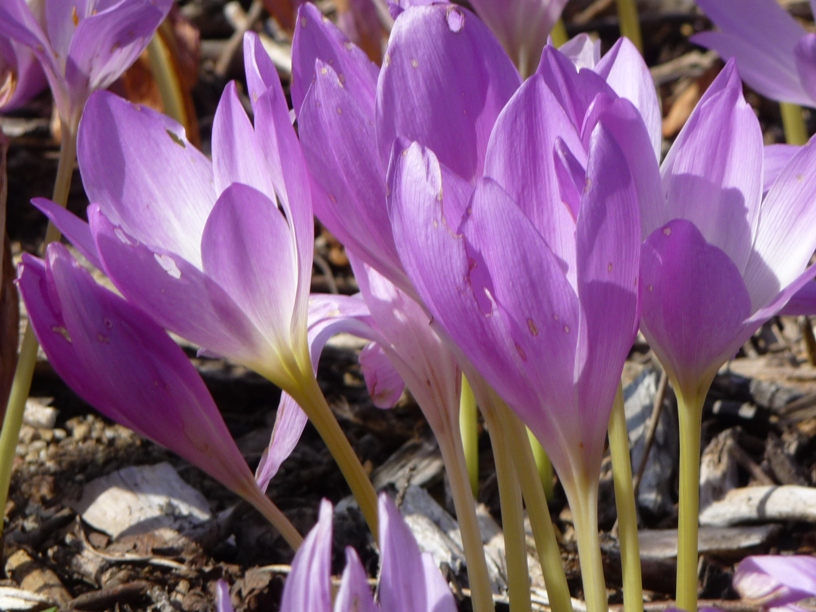
Autumn crocus is a true autumn-flowerer that occcurs across much of south Europe. This is obvious from its scientific name: Colchicum comes from Colchis, a region to the east of the Black Sea, and autumnale meaning ‘autumn’.

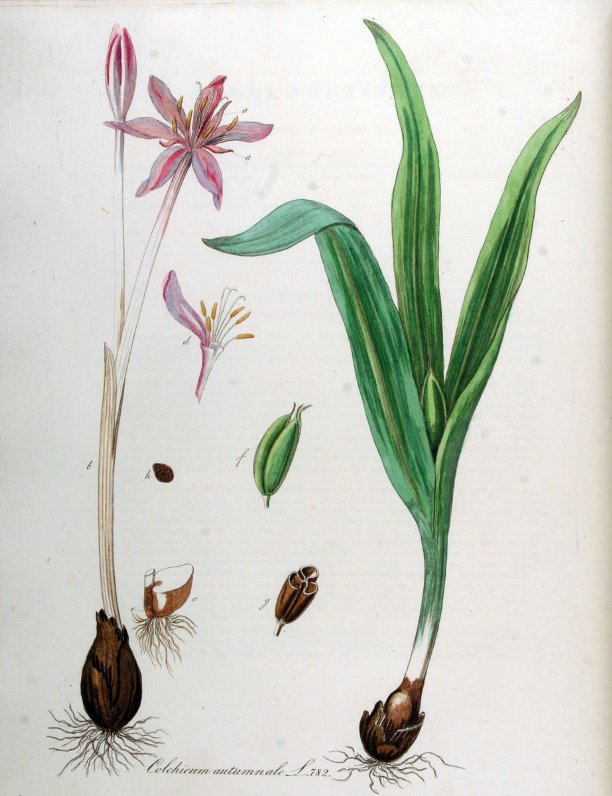
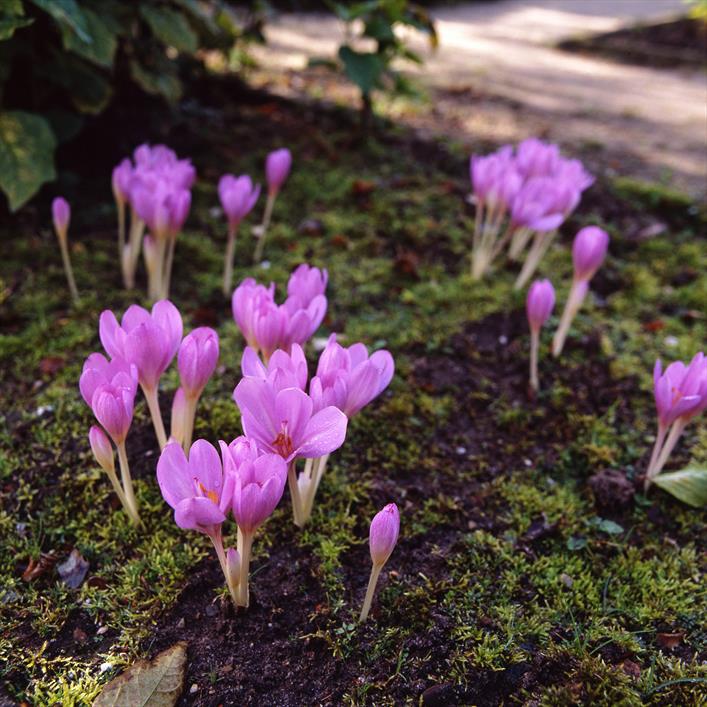
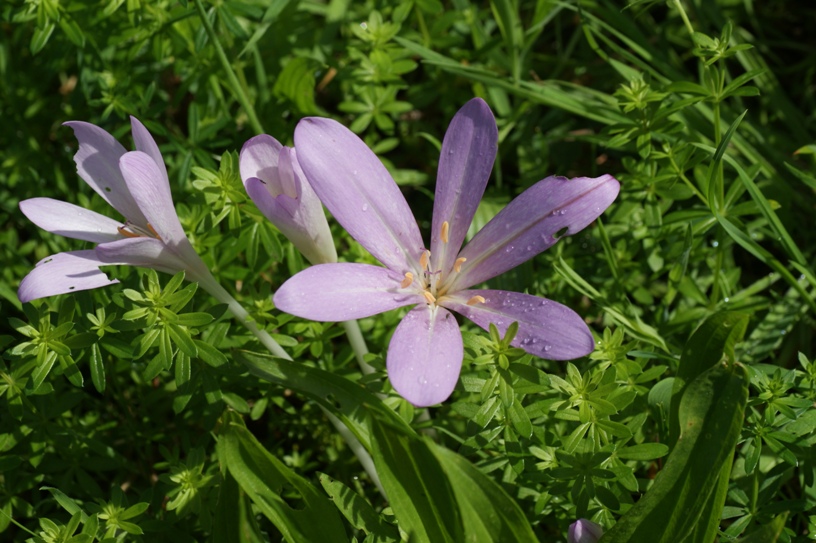
The flower (single or in twos or threes) develops from a tuber and appears above ground in the autumn. The stamens are purple and the perianth is lilac, rarely white. The accompanying leaves only appear the following spring at the same time as the fruit capsule. The smooth leaves are oblong and up to 5 cm in width.

Autumn crocus is often confused with the Byzantine meadow saffron (Colchicum byzantinum) a ‘stinsen plant’ (i.e. introduced plants originally growing near manor houses mainly in the north and centre of the Netherlands) but the latter blooms more profusely with 5 – 20 flowers per tuber, the leaf is wider and crinkled lengthwise. The fruit capsules of the contain no seeds.

Autumn crocus is pollinated by insects and the seeds dispersed by the wind or ants. The plant contains the very toxic colchicine that impedes normal cell division. Plant breeders use colchicine to generate polyploidy: an individual (and from the polyploid different varieties) with double the normal number of chromosomes (often with greater yields, or larger flowers), Colchicine is used as a medicine for gout, rheumatism and cancer.

Read more.... »
Collecting prohibited

Autumn crocus is a true autumn-flowerer that occcurs across much of south Europe. This is obvious from its scientific name: Colchicum comes from Colchis, a region to the east of the Black Sea, and autumnale meaning ‘autumn’.

The flower (single or in twos or threes) develops from a tuber and appears above ground in the autumn. The stamens are purple and the perianth is lilac, rarely white. The accompanying leaves only appear the following spring at the same time as the fruit capsule. The smooth leaves are oblong and up to 5 cm in width.

Autumn crocus is often confused with the Byzantine meadow saffron (Colchicum byzantinum) a ‘stinsen plant’ (i.e. introduced plants originally growing near manor houses mainly in the north and centre of the Netherlands) but the latter blooms more profusely with 5 – 20 flowers per tuber, the leaf is wider and crinkled lengthwise. The fruit capsules of the contain no seeds.

Autumn crocus is pollinated by insects and the seeds dispersed by the wind or ants. The plant contains the very toxic colchicine that impedes normal cell division. Plant breeders use colchicine to generate polyploidy: an individual (and from the polyploid different varieties) with double the normal number of chromosomes (often with greater yields, or larger flowers), Colchicine is used as a medicine for gout, rheumatism and cancer.

Ecology and habit

Autumn crocus grows on damp, calcareous and lightly manured grounds. It occurs in deciduous woods, in forest edges and thickets, in pastures and on chalk grassland, fields with natural springs and river dykes. The Netherlands lies on the northwestern edge of its European range. It is rare in Southern Limburg and very rare in Middle and North Limburg, North Brabant, along main river areas and in the east of the country. Sometimes planted.

Threat

Autumn crocus is threatened through loss of habitat. Changes in forest management and farmland (in particular increased use of fertilisers) have had a negative effect. Autumn crocus is on the list of protected plants. Collecting prohibited.

« Description

Present in:

Hortus Botanicus Amsterdam
Hortus Alkmaar
Hortus botanicus Leiden
Botanische Tuinen Universiteit Utrecht
Domies Toen
Botanische Tuin Arboretum Oudenbosch
Hortus Nijmegen
Hortus Overzee
Hortus botanicus Haren / Groningen
Botanische Tuin De Kruidhof
Nederlands Openluchtmuseum

Themes

The Botanical Gardens Association cannot take any responsibility for any adverse effects of the use of plants. Always seek the advice of a professional before using any plant medicinally. Always seek the advice of a professional before using any plant medicinally.

Bumblebees actively seek out the nectar and the orange-red pollen from this plant.

Colchicine is used as a medicine for gout, rheumatism and cancer.

Autumn crocus contains highly toxic colchicine that impedes normal cell division.

Details

Description: Bulbous or tuberous plant, up to 0.25 m.
Distributions: Central europe and in parts of western and southern europe from northern portugal, southeastern ireland, the netherlands, central england and eastwards to the balkans.
Habitat: Deciduous forest, forest margins, scrub, coastal dunes, grasslands, river dykes and on slopes with springs.
Year cycle: Perennial (trees and shrubs included)
Hardiness: 5 - 14 f (hardy - cold winter)
Flowering period: Augustus - november
Flower color: Purple, pink
Notes on flowers: Lavender-pink.
At its best: Augustus - november

Distribution

http://www.verspreidingsatlas.nl/0345

Sources

http://www.floron.nl/publicaties/rode-lijst-2012,
http://www.drachtplanten.nl/,
https://www.rhs.org.uk/Plants/4190/i-Colchicum-autumnale-i/Details?returnurl=%2fplants%2fsearch-r...,
http://wilde-planten.nl/herfsttijloos.htm
  Back to results
NVBT
  • Press
  • Contact
  •