• Gardens
  • Find plants
  • Floriade 2022
  • Botanic guardians
  • home
  • about us
  • contact
Nederlands
  Back to results

Midland Hawthorn or English hawthorn

Crataegus laevigata

Rose family (Rosaceae)

Vulnerable (VU)

Felling may lead to misfortune

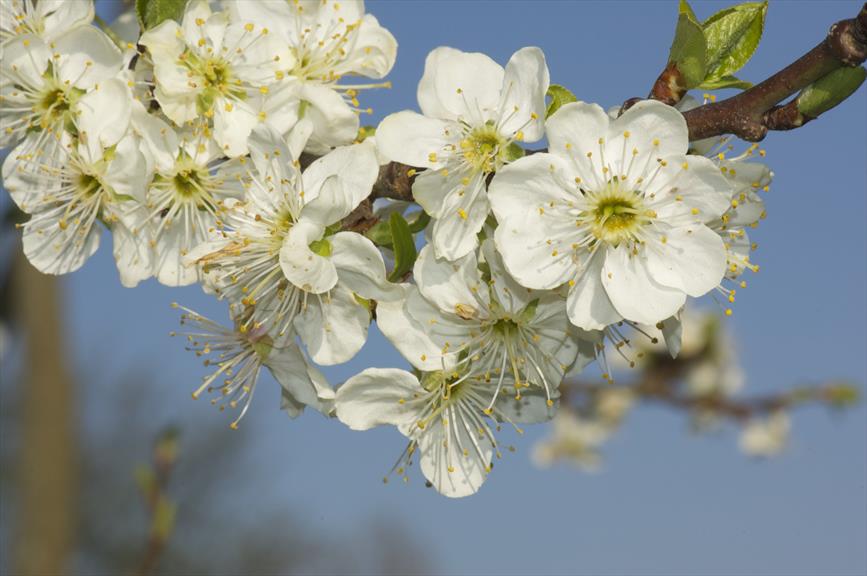
The mayflower is difficult to distinguish from the common hawthorn. The leaves of the mayflower are less dissected but the critical difference lies with the flower in having two, sometimes even three, styles. This number repeats in the fruit, which bear two or three fruit. In contrast with the flowers of the common hawthorn, which is relatively unperfumed, the mayflower is beautifully fragranced. By the beginning of May, early in the spring, the mayflower can be seen flowering throughout the countryside – earlier than the common hawthorn.

Hawthorns have been attributed magical powers. Felling a tree will bring bad luck, perhaps death itself. The hawthorn has long been used in layered hedges before the advent of barbed wire fencing. A variety of the mayflower is the red mayflower ‘Paul’s Scarlet’. There are few anthers present in the deep red, double flowers, instead they are largely fused into petals. This has given rise to a beautiful flower, but viability has been reduced.

Read more.... »
Felling may lead to misfortune

The mayflower is difficult to distinguish from the common hawthorn. The leaves of the mayflower are less dissected but the critical difference lies with the flower in having two, sometimes even three, styles. This number repeats in the fruit, which bear two or three fruit. In contrast with the flowers of the common hawthorn, which is relatively unperfumed, the mayflower is beautifully fragranced. By the beginning of May, early in the spring, the mayflower can be seen flowering throughout the countryside – earlier than the common hawthorn.

Hawthorns have been attributed magical powers. Felling a tree will bring bad luck, perhaps death itself. The hawthorn has long been used in layered hedges before the advent of barbed wire fencing. A variety of the mayflower is the red mayflower ‘Paul’s Scarlet’. There are few anthers present in the deep red, double flowers, instead they are largely fused into petals. This has given rise to a beautiful flower, but viability has been reduced.

Ecology and habit

The mayflower is typical of woods and wooded banks occurring more frequently in inland areas of the Netherlands towards the eastern border. This species prefers somewhat richer, loamy soil and under favourable conditions reaches heights of 4.5 m maximum. By contrast common hawthorn in similarly favourable conditions can out perform the mayflower and reach heights of 10 m. Many can be found in dunes and along river courses on sandbanks.

Threat

During the last century 75% of all established mayflower plants have disappeared at the expense of expanding agriculture and through replacement by barbed wire fencing. Mayflower grew and still grows primarily in ancient hedgerows. Many hawthorns disappeared at the end of the last century when it was thought that the dreaded fruit blight was spread by hawthorn.

« Description

Present in:

Hortus Alkmaar
Landgoed Schovenhorst
Botanische Tuin Arboretum Oudenbosch
Hortus botanicus Haren / Groningen
Arboretum Poort Bulten
Nederlands Openluchtmuseum

Themes

Bees and bumblebees are frequent visitors to this plant in search of its nectar and pollen.

Host- and nectar plant for butterflies.

The red berries are eaten by birds, which disperse the seeds.

Details

Description: Tree, shrub, up to 4.5 m.
Distributions: Central and southern europe, west to central england
Habitat: Ancient woodlands, woodland margins, old hedgerows, steep wooded banks and along water courses on clay soil.
Year cycle: Perennial (polycarpic decidous)
Hardiness: -4 - 5 f (hardy - very cold winter)
Flowering period: Mei
Flower color: White, creme
Notes on flowers: Creamy-white flowers.
Fruiting period: September
At its best: Mei

Distribution

http://www.verspreidingsatlas.nl/0370

Sources

http://www.floron.nl/publicaties/rode-lijst-2012,
http://www.drachtplanten.nl/,
http://www.vlindernet.nl/vlindersalgemeen.php?id=280,
http://wilde-planten.nl/tweestijlige%20meidoorn.htm
  Back to results
NVBT
  • Press
  • Contact
  •