Isu-tree
Distylium racemosum
Witchhazel family (Hamamelidaceae)


A hard but rare wood
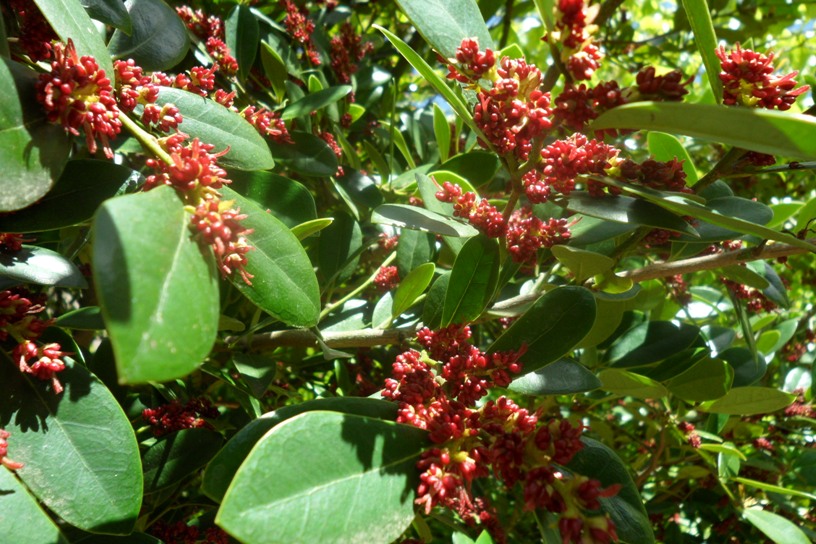
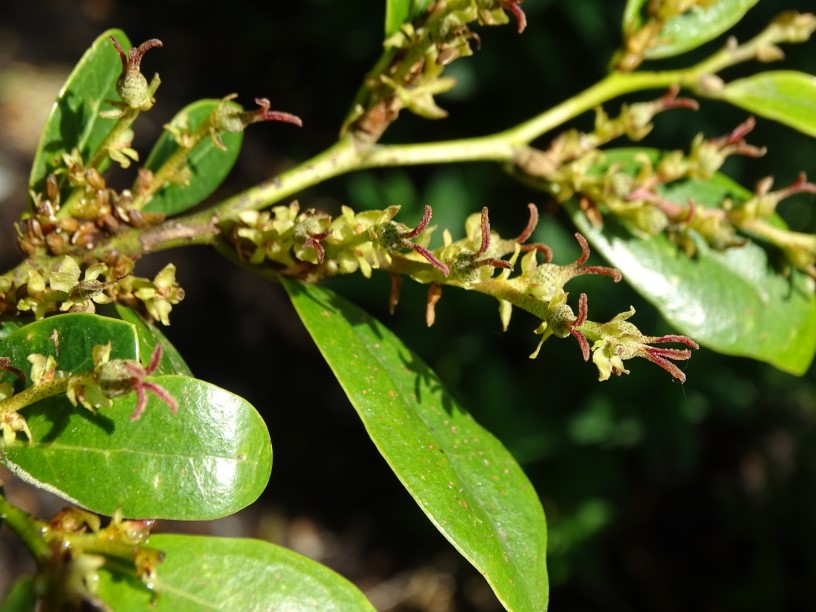
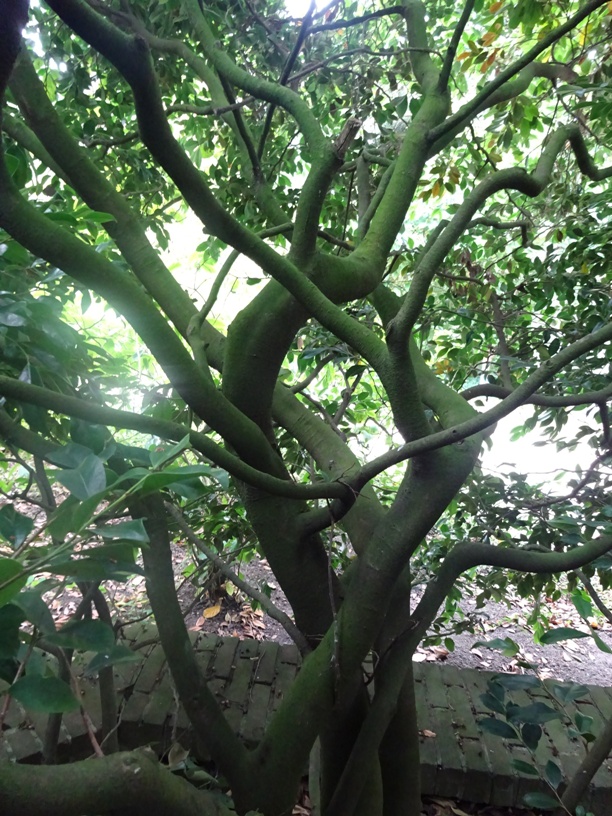
Distylium racemosum is a broad, slow growing, evergreen shrub reaching heights of up to 3 m tall and bearing shiny leaves. In the wild it grows in evergreen oak forests on low mountain ranges in China, Taiwan, Korea and Japan. The crimson-coloured flowers are, as with the majority of plants, hermaphroditic bearing both male and female organs. Subsequently male flowers appear on the same plant. This phenomenon is termed andromonoecious.
The wood of Distilyum wood is called sunuke, and is very hard, rare and expensive. In Japan it is used for making easels and wooden swords, intended to reduce the potential danger during samurai training. The wood is also used for making small consumer items and musical instruments. Ash derived from the timber is used in the glazing of porcelain.
Themes
Crown jewel in the Botanical Garden TU Delft.
Wood of Distylium racemosum is called 'sunuke', its slow growth and relative rarity make it an expensive wood; used to make musical instruments and Japanese wooden swords.
Details
| Description: | Shrub, a slow growing shrub 2 m wide and up to 3 m high; male and bisexual flowers occur on one plant (andromonoecious), yet they are spatially separate from one other. |
|---|---|
| Distributions: | China, korea, japan and taiwan |
| Habitat: | Evergreen oak forests at elevations of 1000 - 1300 m in altitude. |
| Year cycle: | Perennial (polycarpic evergreen) |
| Hardiness: | 14 - 23 f (hardy - average winter) |
| Flowering period: | April - juni |
| Flower color: | Red, cerise |
| Notes on flowers: | With hues ranging from crimson to burgundy red. |
| Fruiting period: | Juni - augustus |
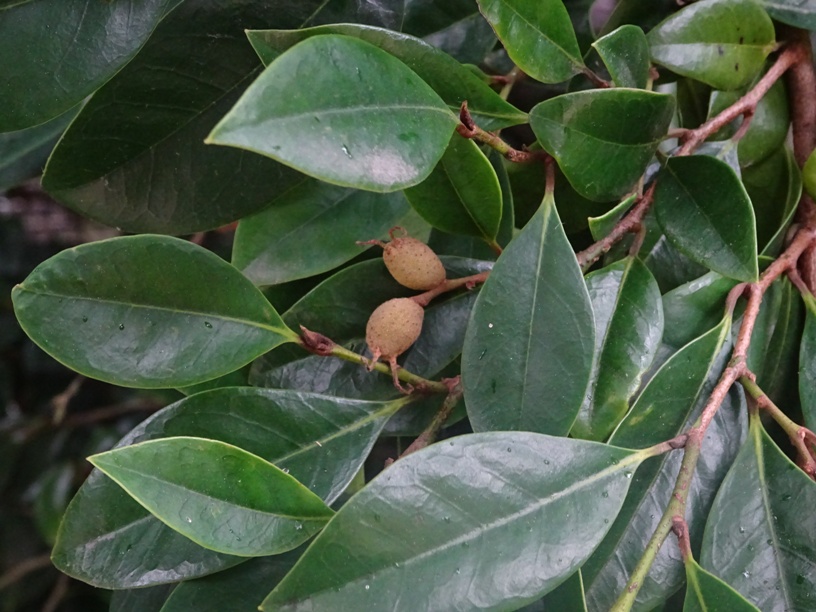
| Fruit color: | Brown, green |
| Notes on fruits: | Fruit is a capsule, 1–1.3 cm, star-shaped, pubescent with brown hairs. |
| At its best: | April - juni |