• Gardens
  • Find plants
  • Floriade 2022
  • Botanic guardians
  • home
  • about us
  • contact
Nederlands
  Back to results

Carthusian Pink

Dianthus carthusianorum

Pink family (Caryophyllaceae)

Endangered (EN)

Living on the margins is perilous

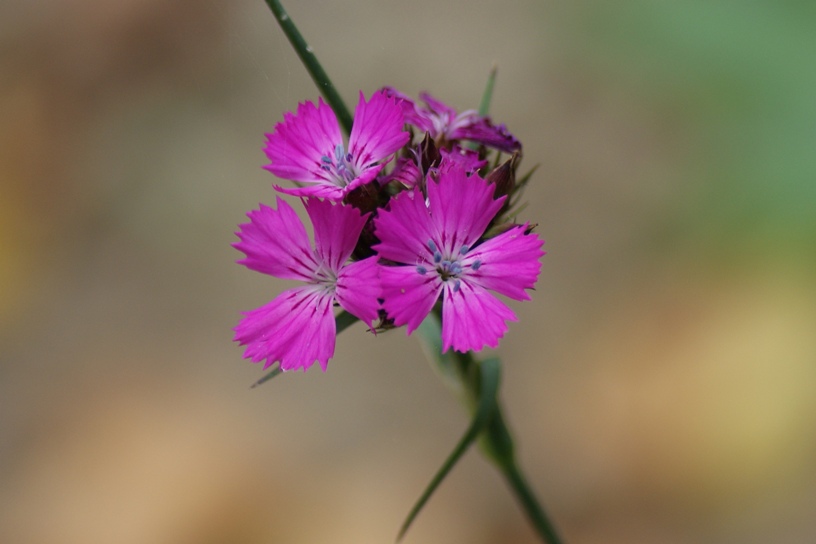
Dianthus, the Latin name for the genus, is a combination of the Greek words dios (god) and anthos (flower). Unlike the wild maiden pink carnation, which grows on limestone poor areas, the Carthusian pink carnation prefers an alkaline soil. This very rare wild carnation has inflorescences of crimson flowers borne in clusters similar to those of sweet william.

In the Netherlands the Carthusian pink grows on the edge of its natural range and up until recently it could be found on the eastern edge of the IJssel at Deventer. Seeds of this plant have also been deliberately sown such that a more or less stable population grows near Amsterdam and on other seeded roadside verges in the suburbs. They are ornamental and not truly wild as there is no place in the wild that can support the whole reproductive cycle, from flowering, fertilization to seed development and dispersal.

Read more.... »
Living on the margins is perilous

Dianthus, the Latin name for the genus, is a combination of the Greek words dios (god) and anthos (flower). Unlike the wild maiden pink carnation, which grows on limestone poor areas, the Carthusian pink carnation prefers an alkaline soil. This very rare wild carnation has inflorescences of crimson flowers borne in clusters similar to those of sweet william.

In the Netherlands the Carthusian pink grows on the edge of its natural range and up until recently it could be found on the eastern edge of the IJssel at Deventer. Seeds of this plant have also been deliberately sown such that a more or less stable population grows near Amsterdam and on other seeded roadside verges in the suburbs. They are ornamental and not truly wild as there is no place in the wild that can support the whole reproductive cycle, from flowering, fertilization to seed development and dispersal.

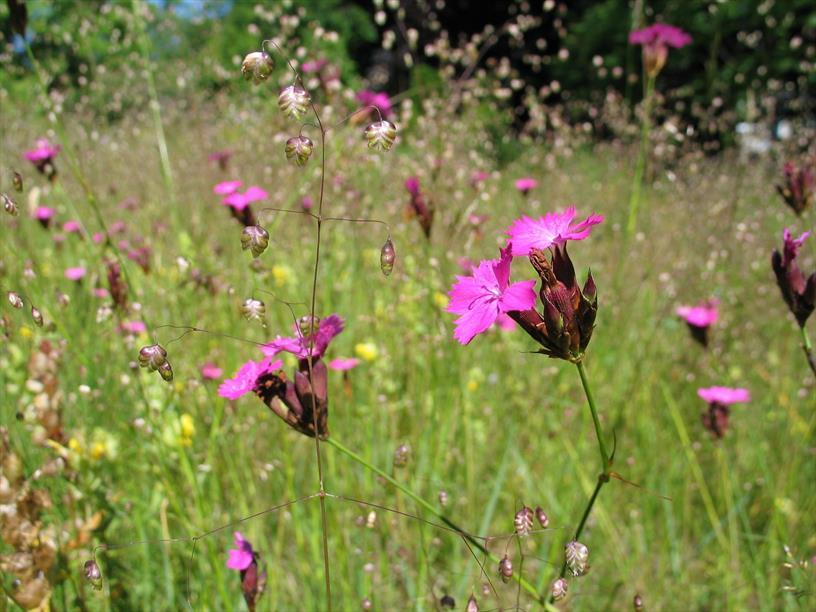
This very rare, wild pink has carmine-red flowers arranged in a shape similar to the inflorescence of sweet William. The Carthusian pink is not named after the religious Carthusian order of monks, but after Frederik and Johan Karthauser, two 18th century naturalists. The Latin name for the genus, Dianthus, corrupted to carnation, is a composition of the Greek word dios (god) and anthos (flower). Growing to a maximun height of 45 cm in the wild. This species has always been uncommon in the Netherlands.

Ecology and habitat

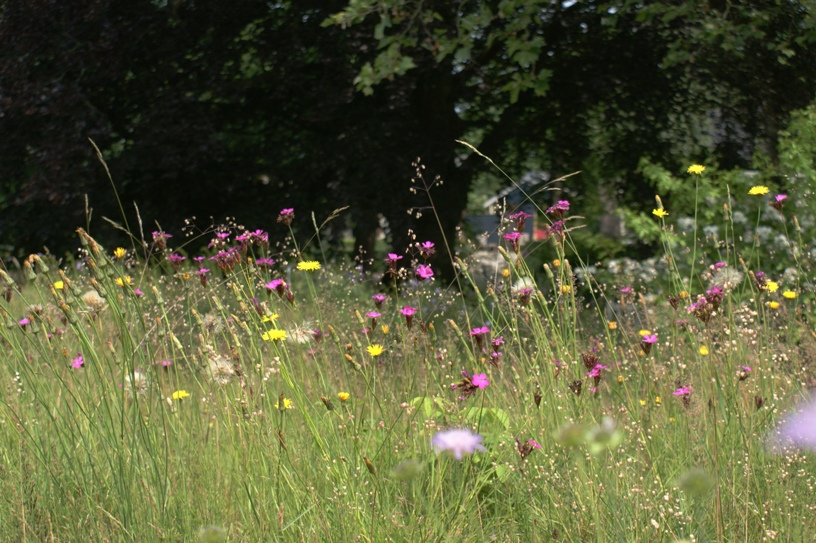
Unlike the Maiden pink which grows in the Netherlands in lime deficient places, the Carthusian pink prefers more calcareous soils. It prefers the calcareous grasslands found on the mountains of central Europe. It is the host for the moth Coleophora dianthi. Since the last century the species has been present in the Netherlands at some local ‘outposts’ for example until recently it has been growing on the eastern edge of the IJssel valley near Deventer, in dry unfertilized grasslands and embankments.

Threat

In the Netherlands the Carthusian pink is growing on the edge of its natural distribution range. It is perilous living here: not much needs to happen for the species to disappear. The overgrowth of unfertilised grassland, through over fertilisation, the loss of extensive land management, or simply the intensification through too frequent mowing can lead to its rapid demise. The Carthusian pink was last recorded in the wild in 1972. It appears every now and again as a result of sowing flower mixtures and has become naturalised locally. Since 1950 it has decreased significantly in abundance. It is also sown and is now only occurs in a more or less stable population around Amsterdam and on other roadside verges where it has been sown. It looks pretty but these are no wild areas where nature can determine the whole life cycle from flowering through fruiting, seed forming and dispersal.

« Description

Present in:

Hortus Botanicus Amsterdam
Botanische Tuinen Universiteit Utrecht
Domies Toen
Botanische Tuin Arboretum Oudenbosch
TU Delft Hortus Botanicus
Hortus botanicus Haren / Groningen
Nederlands Openluchtmuseum

Themes

The Botanical Gardens Association cannot take any responsibility for any adverse effects of the use of plants. Always seek the advice of a professional before using any plant medicinally. Always seek the advice of a professional before using any plant medicinally.

Crown jewel of Domies Toen.

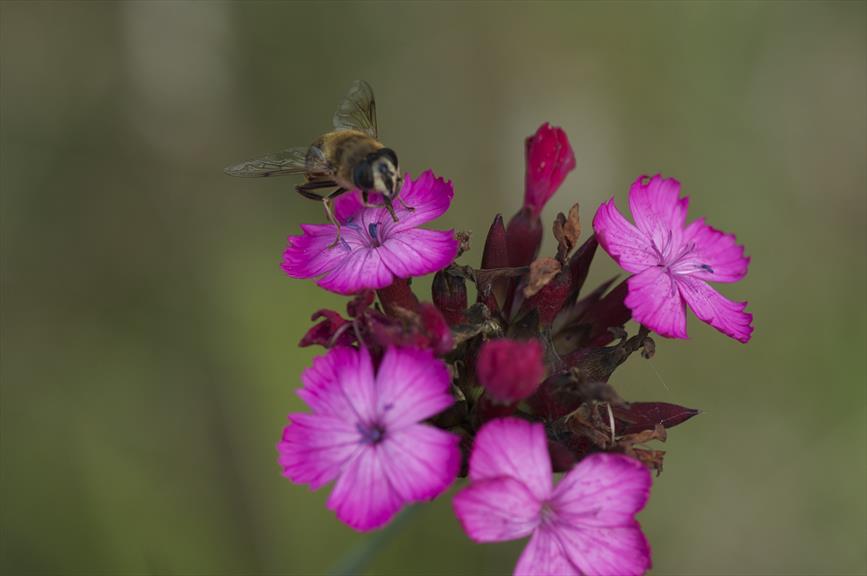
Pollination is carried out by butterflies whose probosces are long enough to reach the nectar at the base of the narrow, tube-shaped calyx. The Carthusian pink is the host plant for the moth Coleophora dianthi.

Carthusianorum means 'the Carthusian(s)'. Dianthus is derived from the Greek 'dios' (Zeus) and 'anthos' (flower) and because of its beauty the carnation was dedicated to Zeus.

In the past Carthusian monks used this plant to treat rheumatism and in the manufacture of soap.

Details

Description: Herb, up to 0.45 m.
Distributions: Central europe
Habitat: Mountainous calcareous grasslands.
Year cycle: Perennial (trees and shrubs included)
Hardiness: Colder than -4 f (very hardy)
Flowering period: Mei - augustus
Flower color: Pink, red, cerise
Notes on flowers: Carmine-red flowers make up the flower head (capitulum).
At its best: Mei - augustus

Distribution

http://www.verspreidingsatlas.nl/0403

Sources

http://www.floron.nl/publicaties/rode-lijst-2012,
http://wilde-planten.nl/steenanjer.htm,
https://www.rhs.org.uk/Plants/5711/i-Dianthus-deltoides-i/Details,
http://www.missouribotanicalgarden.org/PlantFinder/PlantFinderDetails.aspx?taxonid=279080&isprofi...,
http://www.kew.org/science-conservation/plants-fungi/dianthus-carthusianorum-carthusian-pink
  Back to results
NVBT
  • Press
  • Contact
  •